
Blame the grocery store labels. They are marketing ninjas. Some brands call their strained tomatoes “sauce,” while others call the same stuff “puree.” It’s a conspiracy to make us squint at jars.
Here’s a quirky fact: In Italy, the line is even blurrier. They have passata, which is raw, strained tomatoes—no cooking. That’s not sauce or puree. It’s tomato purgatory. Visit a supermarket in Rome and you’ll find ten varieties, each claiming to be the “real” one.
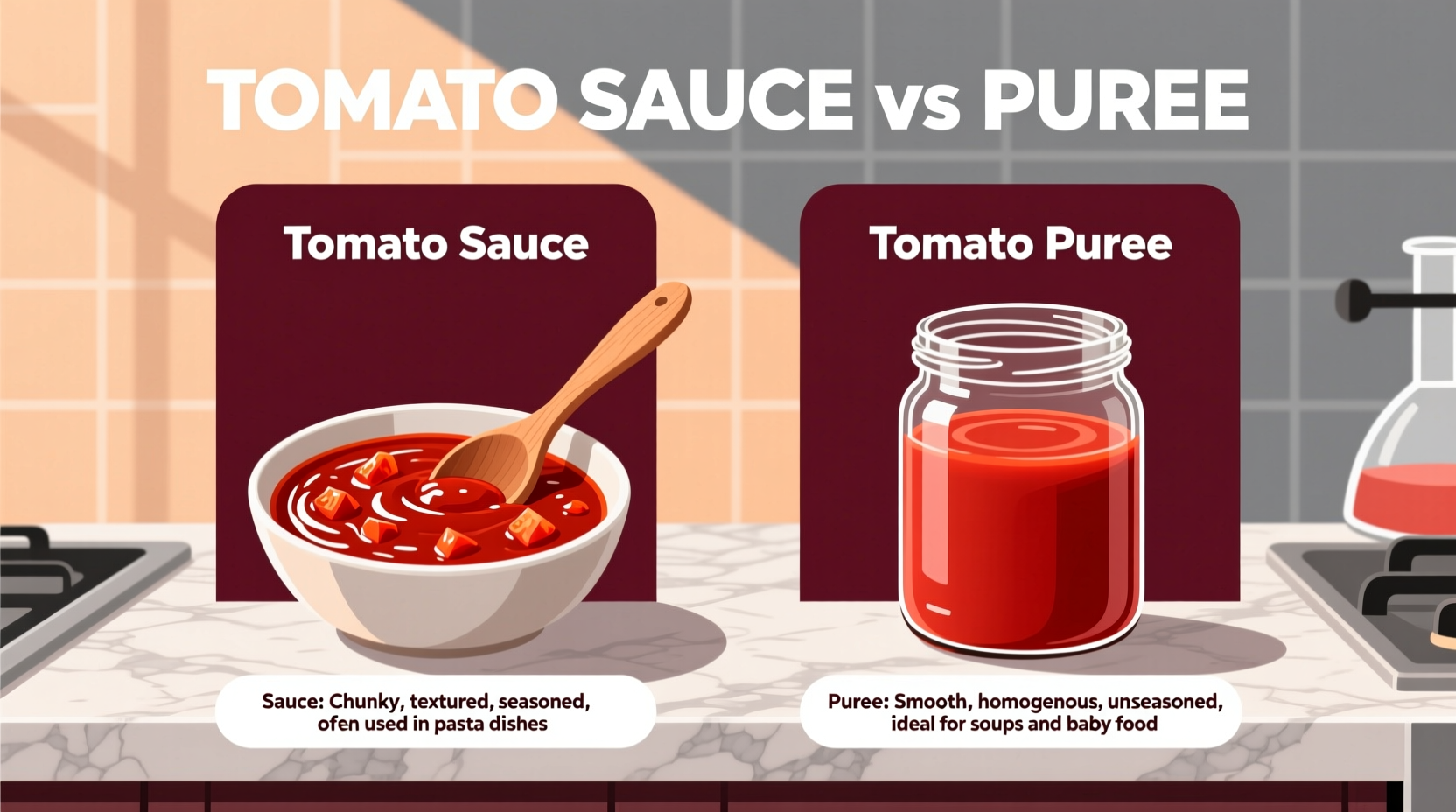 Tomato Sauce vs Puree: Key Differences Explained
Even chefs argue about it. I once saw a chef scream, “Puree is a reduction, not a sauce!” Another chef threw a spoonful at him. (I’m not kidding. Dinner service got intense.)
The Secret Ingredient Difference
Tomato sauce often contains added sugar, salt, and herbs. That’s why it’s ready to eat straight from the can. Puree? It’s just tomatoes and nothing else. Naked, vulnerable, and powerful.
Check the ingredient list—it’s a dead giveaway. If you see “tomatoes, citric acid” you’re holding puree. If you see “tomatoes, onion powder, garlic, basil,” you’ve got sauce. One is a solo artist, the other is a band.
Funny detail: Puree is so intense that a single tablespoon can change the entire color of your soup. Sauce would need half a cup. It’s the superhero concentrate of the tomato world.

