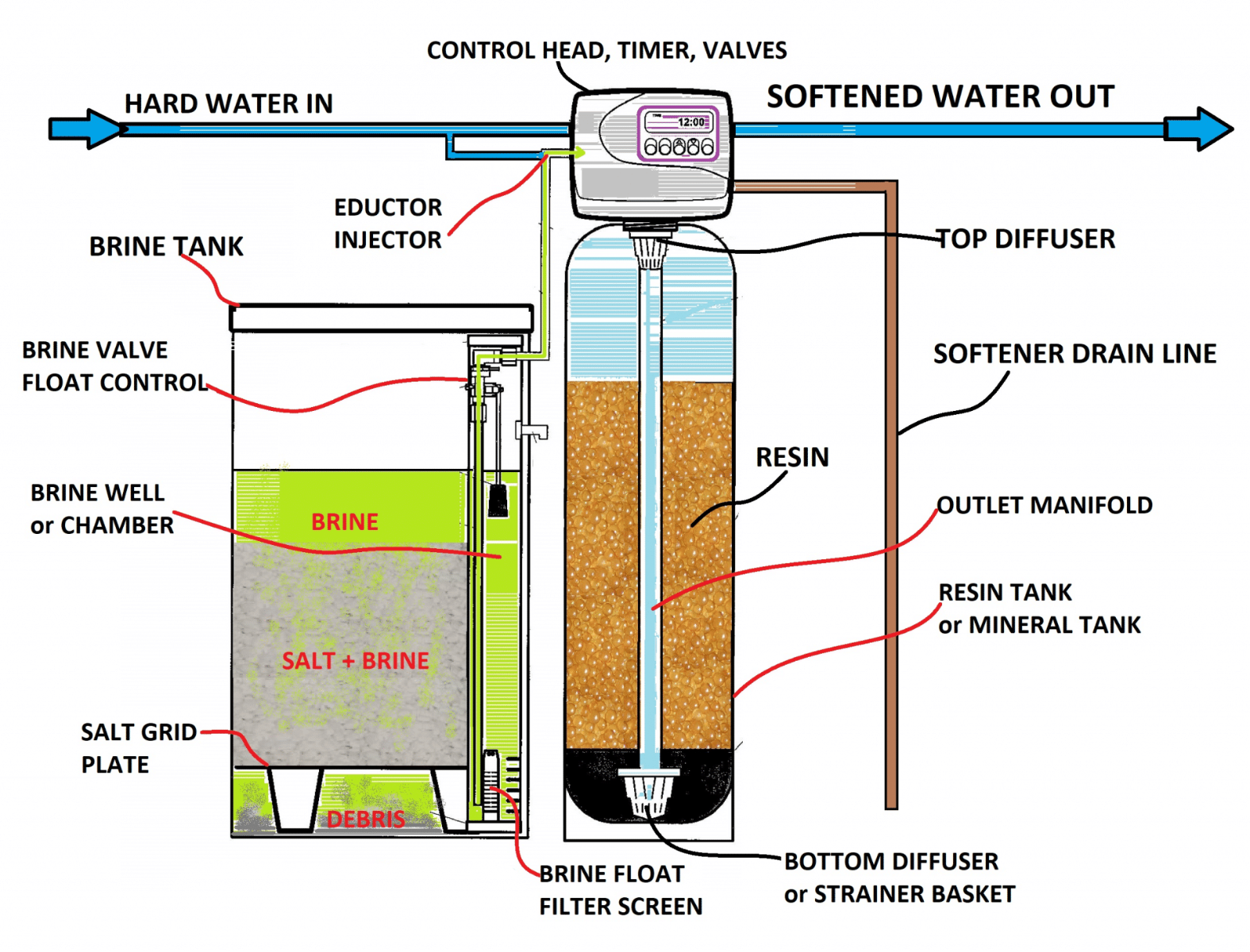
I know, I know. Salt in your water? Sounds backwards. But here’s the kicker: the brine tank doesn’t send salt into your drinking water. It never mixes with your household supply. The brine only flows through the resin tank and then straight to the drain. Your drinking water stays as low-sodium as ever (unless you add salt yourself, which, please don’t).
It’s a bit like using a dirty mop to clean a floor—you soak the mop in soapy water, wring it out, and then rinse it clean. Your floors aren’t covered in soap residue. Similarly, your pipes aren’t filled with saltwater. Smart, right?
The "Gremlin" factor: what can go wrong
Now, let me tell you about the time my brine tank decided to play dead. I noticed my water was getting hard again, so I popped open the lid. Inside? Nothing but a dry, salt-crusted bridge that looked like a miniature Stonehenge. Salt bridging is when the salt forms a hard crust above the water, so no brine can form.
The fix? I grabbed a broom handle and gently poked the crust until it broke apart. A satisfyingly primitive solution, honestly. Also, check for mushrooming—that’s when the salt forms a solid block below the water level. That usually requires breaking it up or calling in a plumber who will judge your salt choice.

