
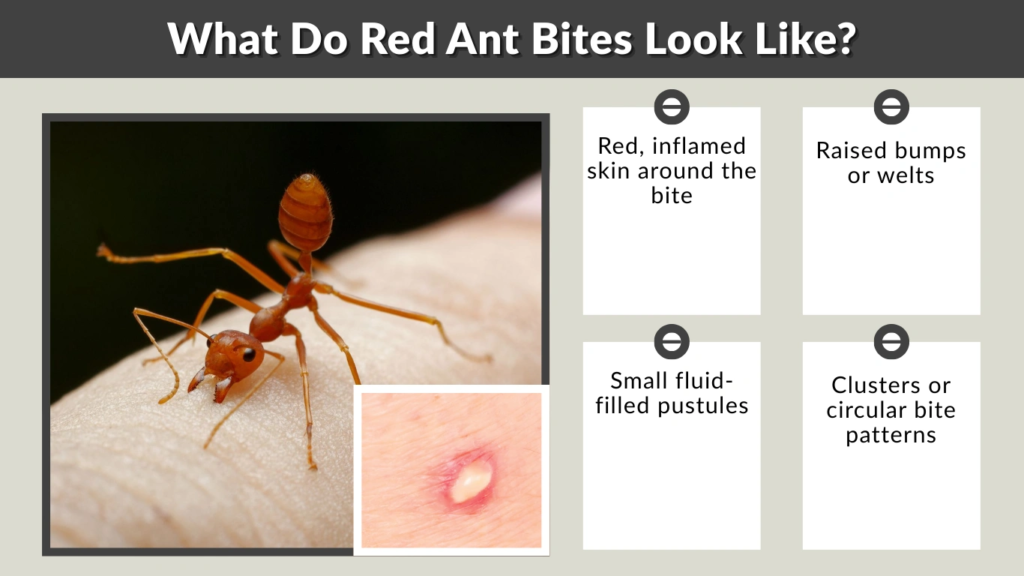
Ninety-nine percent of the time, an ant bite starts as a small, pinkish-red dot. Think of a tiny pimple, but angrier. It’s usually surrounded by a faint, flushed halo of irritated skin, like a guilt-ridden blush.
If you’re unlucky, that dot evolves into a hard, raised bump. It feels like a tiny pebble just under your skin. The star of the show? That bump will itch like a mosquito bite that’s been double-crossed by a jealous mosquito.
Don’t touch it. Seriously. I know, it’s a reflex. But scratching just makes the bump bigger and redder. It’s like giving the ant a victory lap around your ankle.
The Fire Ant Special: A Blister You Didn’t Order
Now, if you tangled with a fire ant—a true jerk of the insect world—the look changes. Within a day, that red dot often turns into a small, white pustule. It looks like a blister with a little pearl of pus inside.
Gross? A bit. Fascinating? Absolutely. This pustule is not an infection—it’s just your immune system throwing a weird party. Don’t pop it! (I popped mine. Regretted it. It turned into a tiny, weepy crater for a week. Learn from my hubris.)
 Red Ant Bites: Identification, Symptoms, Treatment, and Allergic Reactions
This blister usually sits on a flat, red patch of skin, making it look like a tiny eye staring back at you. It’s the ant bite that screams, “I was here, and I was mad.”

