
Here’s where it gets fun—and useful. The percentage of body weight you lift changes dramatically based on your angle. Think of it like adjusting the difficulty slider on a video game.
Doing push-ups on an incline, like against a kitchen counter or a park bench, drops the load to about 41% of your weight. It’s a gentle entry point, perfect for warming up or building confidence. Your legs are doing more of the supporting work, so your upper body gets a lighter workout.
Now, flip the script. Put your feet up on a couch or a sturdy box for a decline push-up. Suddenly, you’re pushing a whopping 74% of your body weight. That’s a serious challenge that targets your upper chest and shoulders like nothing else.
And Don’t Forget the Knee Push-Up
Let’s talk about the humble, often-maligned knee push-up. Spoiler alert: it’s not cheating; it’s smart math. When you drop your knees to the floor, you shorten the lever, and the load drops to about 49% of your body weight.
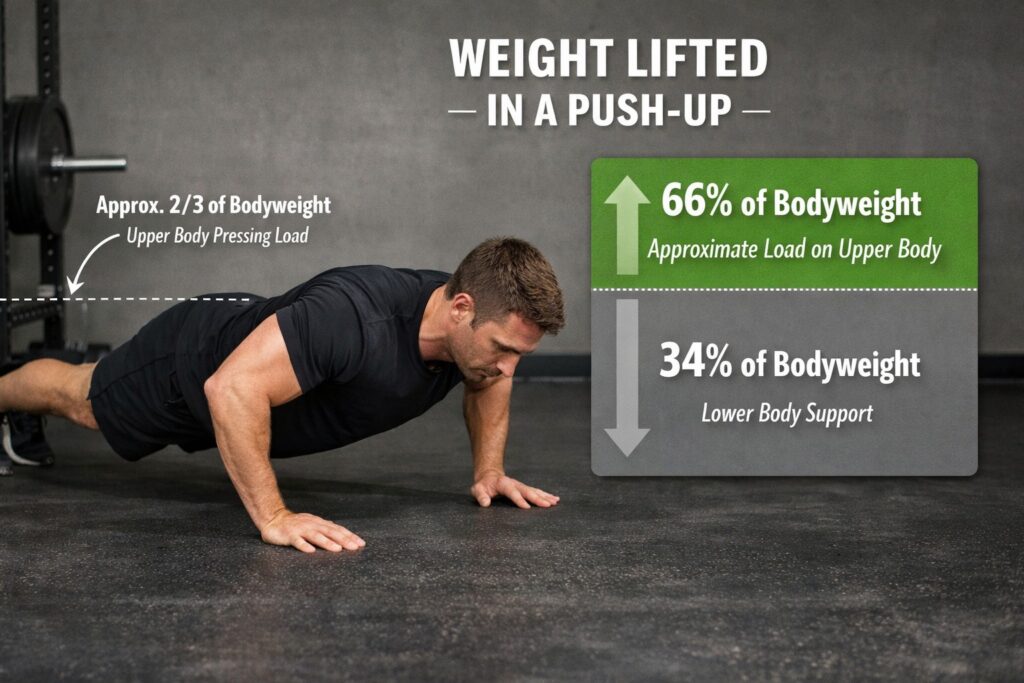 How Much Weight Do Push-Ups Actually Lift? It’s More Than I Expected
That’s less than half of your total mass! This makes knee push-ups a fantastic tool for building strength, perfecting form, or giving your joints a break. It’s your own personal “Easy Mode,” and using it wisely is how you level up.
So, why does any of this matter for your fun, daily life? Because numbers give you power. Knowing that a standard push-up is a 64% load lets you celebrate a real win: you’re moving two-thirds of you, every single rep.
It also frees you from the trap of thinking you must do a full push-up to be “fit.” You can play with angles like a DJ plays with beats. Feeling strong? Go decline. Need a confidence boost? Find a sturdy table. You’re in charge of the percentage.

