Here’s the core truth: bacteria is the enemy, not rawness. When you grind cheap meat, you mix surface bacteria into the center, where it can grow. But whole muscle cuts (like the one for tartare) have nearly zero bacteria inside—the bad stuff is only on the outside.
In a professional kitchen, the chef trims off that outer surface completely. What’s left is a pristine, sterile interior. Then they chop it with a sharp knife (not a grinder) to avoid mashing any germs into the mix. It’s like getting a perfectly clean apple—you only worry about the parts you cut.
Plus, the acidic ingredients in tartare—like capers, onions, or a squeeze of lemon—are natural antibacterial agents. They’re not just there for flavor; they’re part of a cultural tradition that’s been around for centuries. People in Europe have been eating tartare since the 1800s, and they haven’t stopped.
The egg yolk: friend, not foe
What about the raw egg on top? That’s another big “wait, what?” moment for most people. But here’s the trick: pasteurized eggs are now common in restaurants, which means they’ve been gently heated to kill salmonella without cooking the yolk.
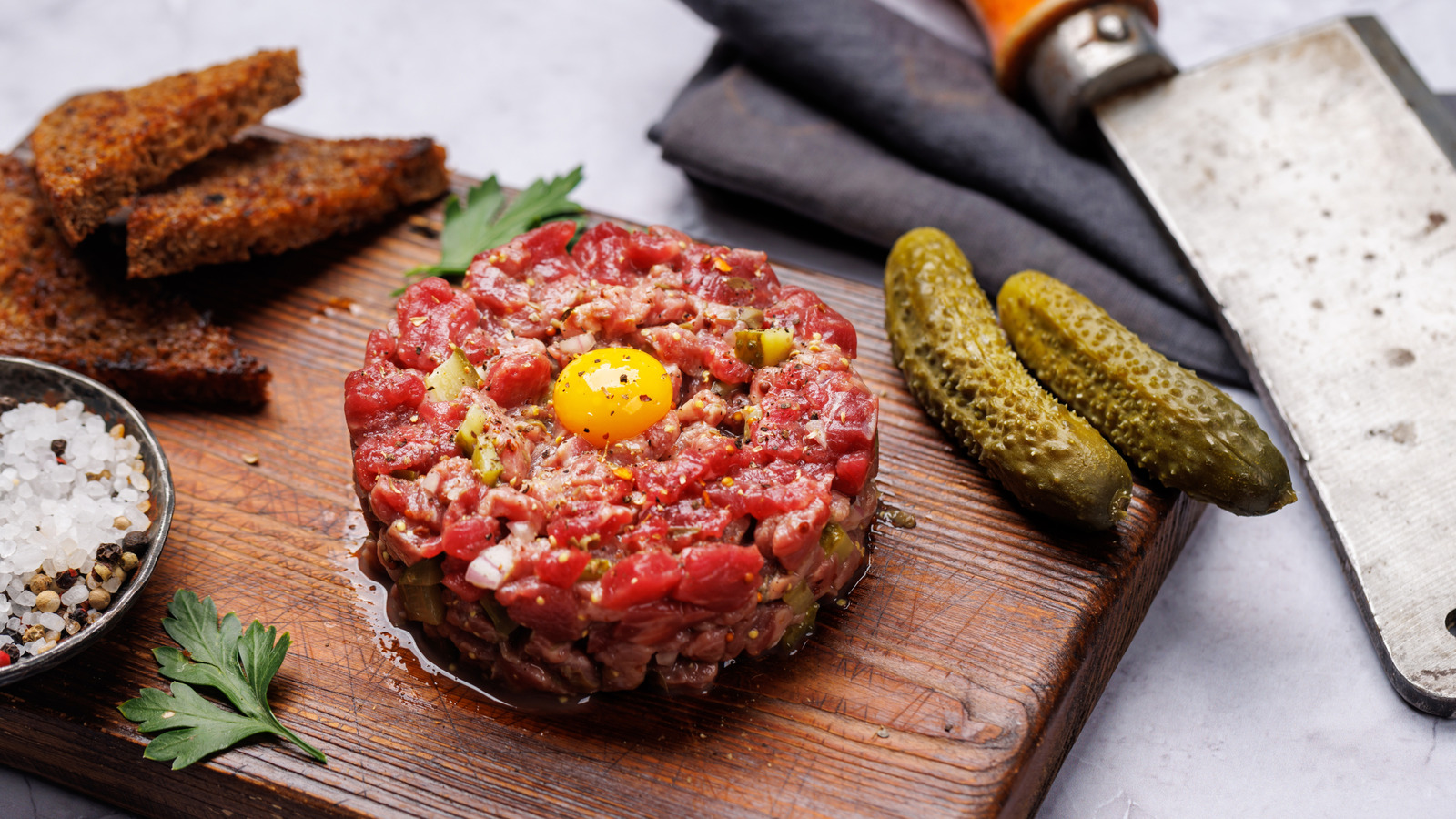 How To Safely Make Beef Tartare At Home
Even with farm-fresh eggs (which many chefs prefer), the risk is incredibly low—like 1 in 20,000 eggs carries salmonella. So that golden yolk is less a danger and more a silky dressing, binding the meat and tart spices together. It’s basically a culinary hug for the beef.
And let’s be honest: you probably take bigger risks every day. Eating salad from a bag? That’s been linked to more recalls than raw beef. Driving to the restaurant? Statistically, that’s way more dangerous than anything on your plate.