Here’s the part that surprises people: boiling removes nothing physical. That cloudy bits, weird colors, or metallic taste? Still there. If your water looks like mud from a rainstorm, boiling turns it into hot, sterile mud. You’d need a filter or chemicals to deal with that stuff. Boiling is a solo act for killing germs, not a whole band.
But let’s be real—in a pinch, this is a lifesaver. Imagine you’re in a flood zone or hiking miles from a store. Knowing you can grab any fresh-looking water, boil it for a minute, and drink it without getting sick? That’s powerful. It’s like a superpower you always have, as long as you have fire and a pot.
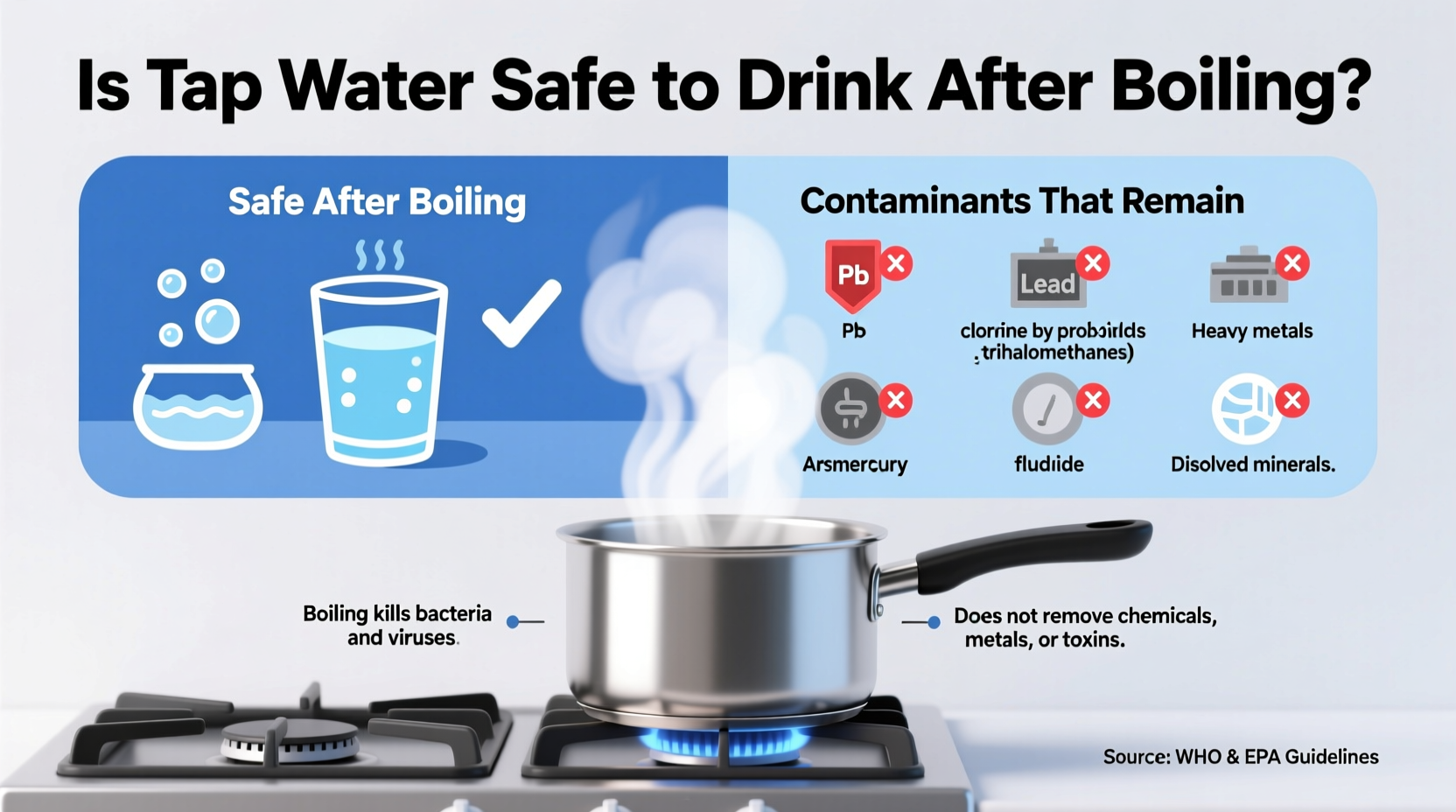 Is Tap Water Safe To Drink After Boiling And What Contaminants Remain
The "But Wait, What About Toxins?" Moment
Sometimes people worry about things like nitrates or arsenic in well water. Boiling can actually make some of these worse because the water evaporates, concentrating the toxins. It’s like making a soup where the bad stuff gets stronger as the broth shrinks. So if your water comes from a known chemical problem—like an old mine or farm runoff—boiling alone isn’t your friend. You’ll need a proper filter or bottled water.
Still, for the vast majority of scenarios—think camp streams, city tap during a boil advisory, or clear lake water—boiling is your golden ticket. It’s the cheapest, simplest way to turn risky water into something you can trust. It doesn’t need batteries, fancy gadgets, or a manual. Just heat and patience.