
Let’s talk about your home’s own pipes. If you live in an older house with galvanized steel pipes, they rust from the inside out over time. That yellow water might be a friendly warning that your pipes are getting a little long in the tooth. It’s like seeing a gray hair on your head—it’s not an emergency, but it’s a sign you’re not getting any younger.
Copper pipes can also do this, but usually they turn water blue-green, which is a whole different kind of confusing color palette. If only your bathtub water is yellow, and the rest of the house is fine, you might have a problem with a specific fixture. Check the aerator on the faucet—sometimes gunk gets trapped there and just refuses to leave, like a bad houseguest.
Pro tip: if the yellow water only happens when you turn on the hot water, blame your water heater. That’s a classic sign of a dying anode rod or general tank sediment. Your water heater is basically a big metal can; sometimes it sweats rusty tears.
Is It Safe to Bathe In?
Here’s the honest truth: in 99% of cases, yes, it’s safe. The water has been treated, and a little iron or rust is not going to hurt you—though it might stain your towels that weird orangey-pink you didn’t plan for. It’s like eating a slightly bruised apple; it’s fine, but you’ll want to wash the weird part off first.
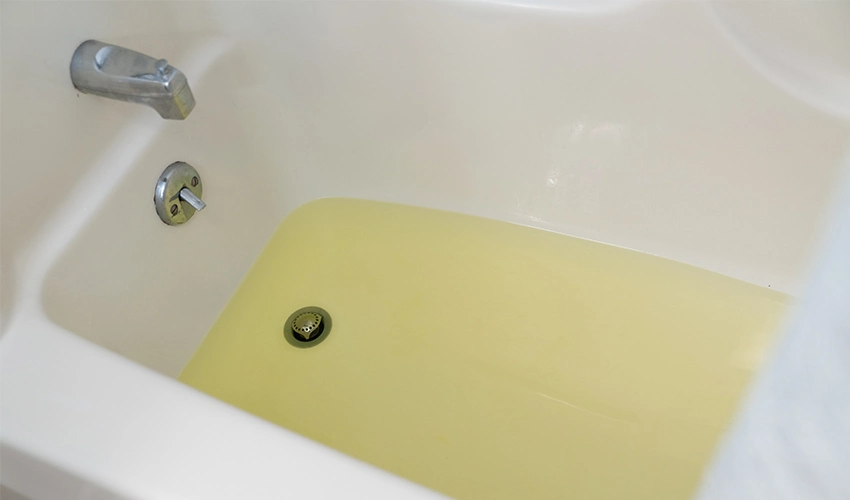 Why Is My Bathwater Yellow? | Mr. Rooter
But if the water smells like rotten eggs, looks like muddy creek water, or tastes like a metal spoon, stop. That could be bacteria or excess manganese, and you should call a plumber or your water company. Do not take a sip of the "mystery creek" flavor.
Honestly, a little yellow water is a great conversation starter when you have guests over. You can claim you’re running an experimental hot springs spa. Just make sure you actually fix it before they start asking for a refund on their stay.

