Ever crack open a bottle and get a whiff of rotten eggs? That’s a classic spring water trick. The culprit is hydrogen sulfide gas, which forms when organic matter decomposes deep underground.
Before you panic, know this: a little hydrogen sulfide is totally natural and not harmful in small amounts. The water is just bubbling up from ancient swamps or volcanic rock. It’s like the earth’s version of a stinky cheese—an acquired taste.
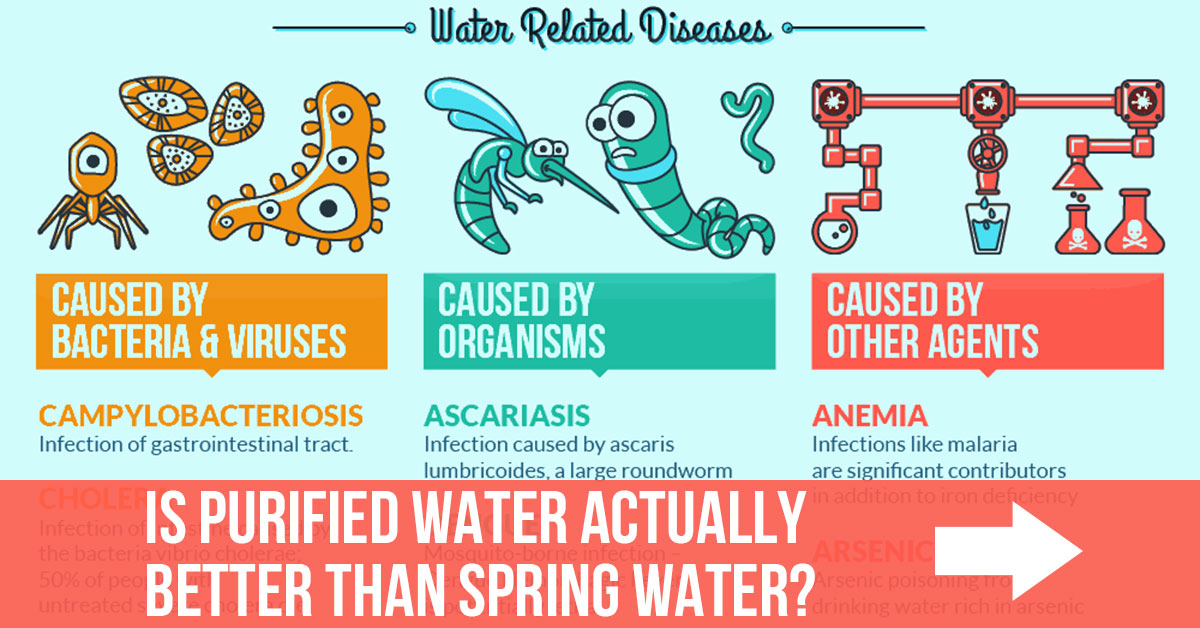 Purified Water Vs Spring Water
Some people actually seek this out! There are famous springs in Europe and Japan known for their “medicinal” eggy flavor. Your tongue might rebel, but your ancestors probably loved it.
The Biology of the Brook
Spring water isn’t sterile. It’s alive with bacteria and microbes. But don’t freak out—most of these are harmless or even beneficial. They’re just teeny-tiny living flavor artists.
These microbes can create a musty or earthy taste, especially if the spring has a lot of leaves or soil in its path. It’s like taking a bite of a forest floor—in a good way, if you’re into that.
If the water tastes sour or sharp, it might have a low pH. That means it’s slightly acidic, picking up carbon dioxide from the ground. It’s basically natural seltzer, but without the bubbles.