Here’s the interesting part: your eye is a liquid-filled sphere, with a clear lens and a retina at the back. The retina is like the film of a vintage camera—super delicate and responsible for your vision.
Without dilation, the doctor can only see the very front of your eye, like peeking through a keyhole. With those drops, they get a full panoramic view of your retina, optic nerve, and blood vessels.
That’s where the cool science happens. They’re checking for sneaky problems you can’t feel, like diabetes damaging your blood vessels or high blood pressure leaving its mark. It’s like having a mechanic check your car’s engine—you can’t just look at the hood ornament, right?
Spotting Silent Troublemakers
One of the biggest reasons they do this is to find glaucoma early. Glaucoma is a sneaky thief of sight that often has zero symptoms until it’s advanced.
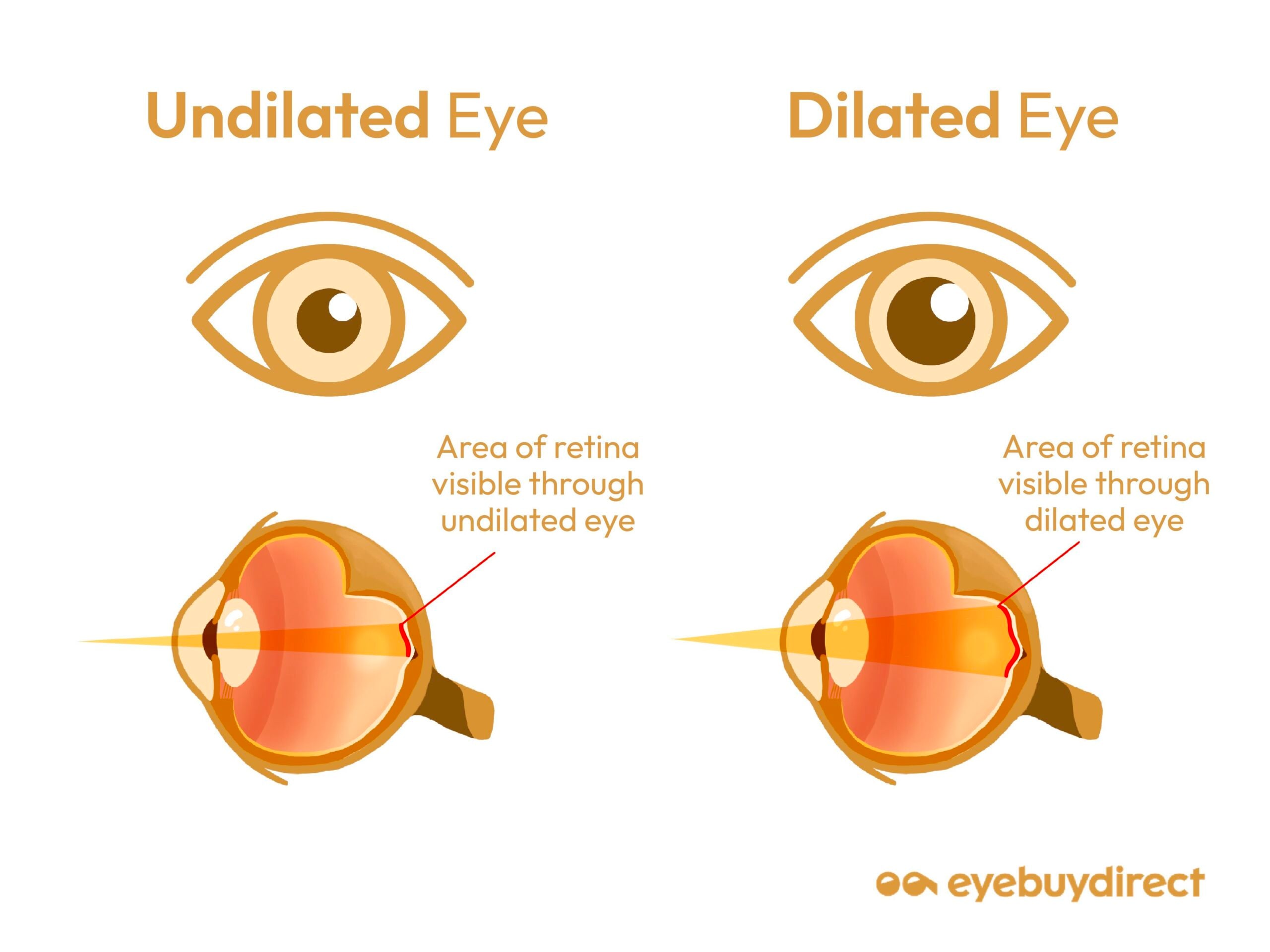 How Long Does Pupil Dilation Last? | Blog | Eyebuydirect
It works like a slow drain blockage in your eye, and only a dilated exam can see the pressure or damage inside. The doctor can also spot macular degeneration, which messes with your sharp central vision—like a smudge on your camera lens.
Even brain tumors can be hinted at by changes in your optic nerve. Creepy, but true. Dilation is your vision’s best early-warning system.