
Think of the ground as a giant, slow-moving sponge. This sponge is made of layers of sand, gravel, and cracked rock. When rain falls or snow melts, gravity pulls that water down into every tiny pocket and crack in this sponge.
That water doesn’t just sit there. It moves—incredibly slowly, sometimes just a few feet per year. This underground storage area is called an aquifer, and it’s the well’s personal reservoir.
Your well is basically a long straw poked deep into that natural sponge. The pump at the top sucks up the water that has been slowly filtered and stored for months, years, or even centuries.
A Raindrop’s Long Journey (and Your Morning Coffee)
Imagine a single raindrop that falls on a field five miles from your house. It soaks into the earth, trickling past layers of dirt and rock. It might take ten years for that drop to finally reach the bottom of your well.
By the time you brew your morning coffee with it, that water has been naturally filtered by the earth itself. It’s like nature’s own Brita filter, scrubbing out particles and adding healthy minerals along the way.
That’s why well water often tastes so crisp and refreshing. It’s not just tap water—it’s a sip of history from a raindrop that fell before your kids were born.
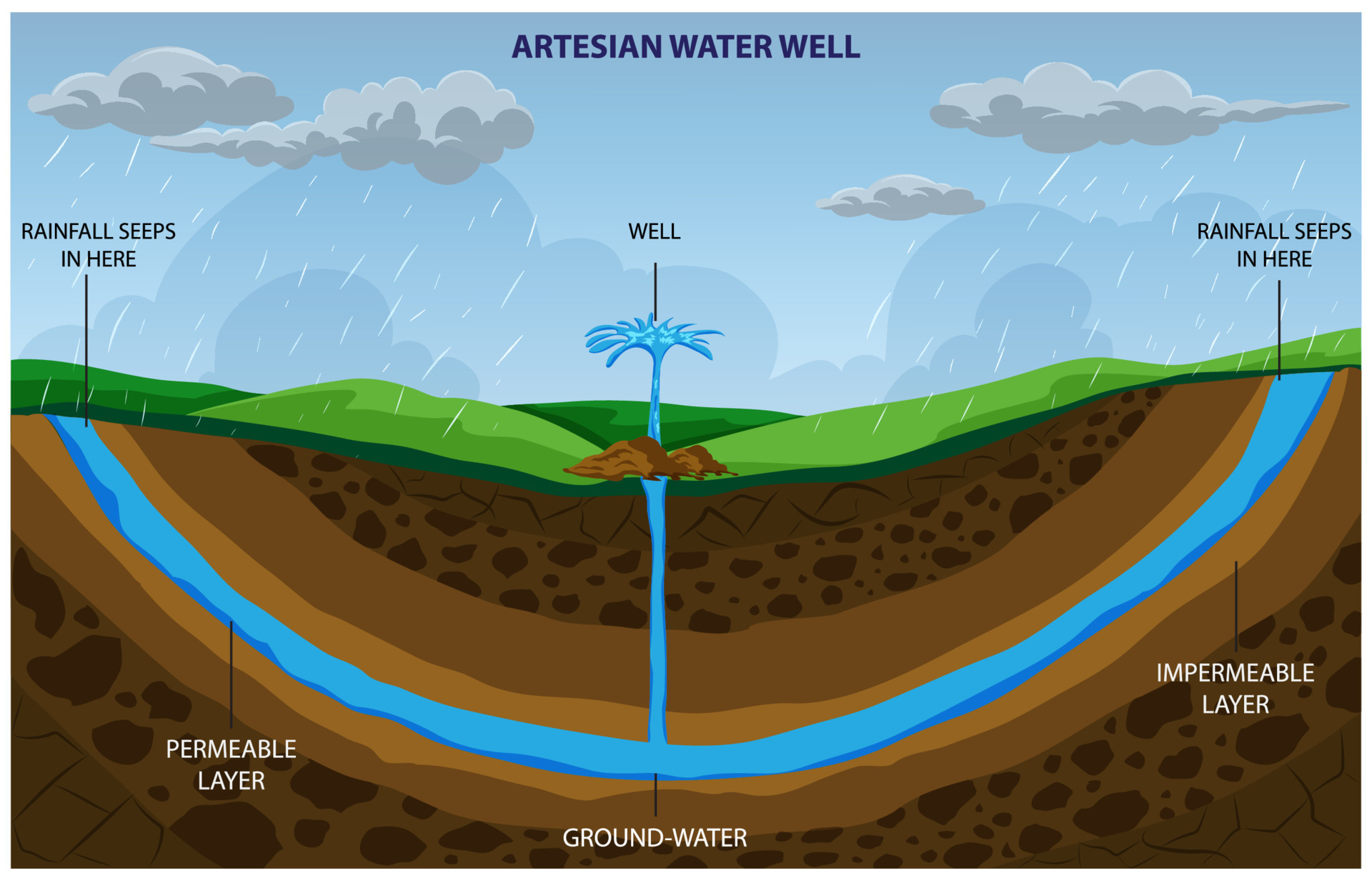 Artesian Well Diagram

