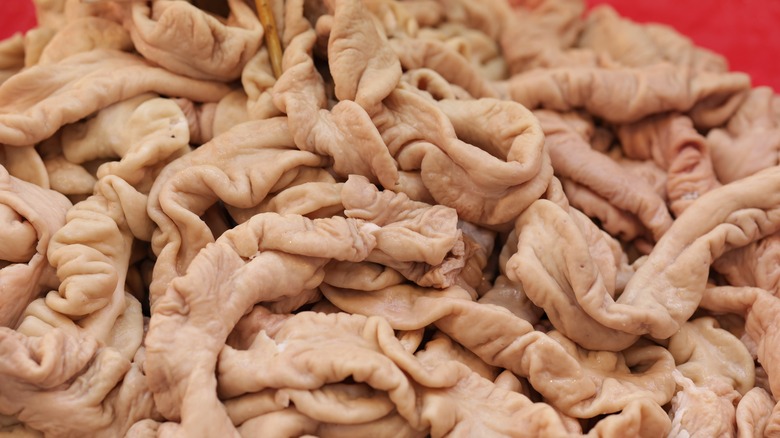
It’s a journey with a few important steps. First, the pig’s intestines are harvested at a processing plant. Workers clean them, boil them, then freeze or pack them in brine to keep them fresh.
:max_bytes(150000):strip_icc()/What-Are-Chitlins-3x2-1-f298e7fc46ff4af6b406c3563a80a558.png) 53 Bizarre Foods From Around the World That People Actually Eat
53 Bizarre Foods From Around the World That People Actually Eat
When you buy them, they’re usually pre-cleaned, but most folks still give them a scrub at home—just to be sure. Then it’s a long, slow simmer with onions, garlic, and a bit of vinegar to cut the richness.
The cooking process can take hours, but the result? Tender, savory curls that soak up flavor like a sponge. Some people eat them with hot sauce; others with collard greens. There are no wrong answers here—only delicious experiments.
The “smelly” elephant in the room
Let’s address the elephant, or rather the pig, in the room: chitlins have a distinctive aroma. Some call it “earthy,” others say “like a barn.” That’s why many cooks boil them in a well-ventilated kitchen—or outdoors.
But don’t let that send you running! The smell comes from natural compounds in the intestines, and it fades as you add seasoning. Think of it as the chitlin’s way of saying, “I’m real food.”
Plus, once they hit your mouth, the flavor is nothing like the smell. It’s rich, porky, and deeply satisfying—like a hug from a very, very curly pig.

