
In the UK, the best times to scarify are early spring (March to April) and early autumn (September to October). Why? Because the soil is warm and damp—perfect for grass to recover quickly. You want your lawn awake and hungry, not half-asleep in winter.
Avoid summer like you’d avoid a sunburn on holiday. Hot, dry weather stresses grass out, and scarifying then is like asking your lawn to run a marathon with no water. And never scarify in frosty winter—you’ll tear the roots and get a muddy, sad mess.
Here’s a little trick: if you can see moss taking over or the grass feels spongey when you walk on it, that’s your cue. The lawn is literally begging you for a good raking.
Light Scarifying vs. Heavy Scarifying
Not all scarifies are created equal. For a light tidy-up (say, March), use a spring-tine rake and go gently. You’re just tickling the surface. For a heavy renovation (autumn is best), use a scarifier machine or a sharp rake and dig deeper—you’ll pull out whole clumps of moss. Your neighbours might think you’ve lost your mind, but trust the process.
Pro tip: Always scarify after you’ve mowed the lawn short—but not too short. Leave it about an inch tall. Then rake in one direction, then the other, like you’re making a cross-hatch pattern on a canvas. It’s oddly satisfying.
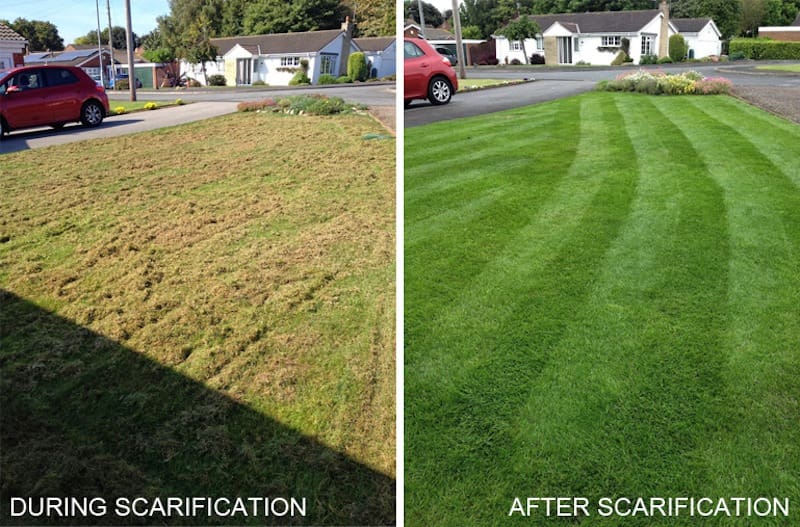 Scarifying Lawn Before And After Pictures
Oh, and you’ll need to water the lawn well two days before. Dry thatch is stubborn; damp thatch practically leaps out. You’re welcome.

