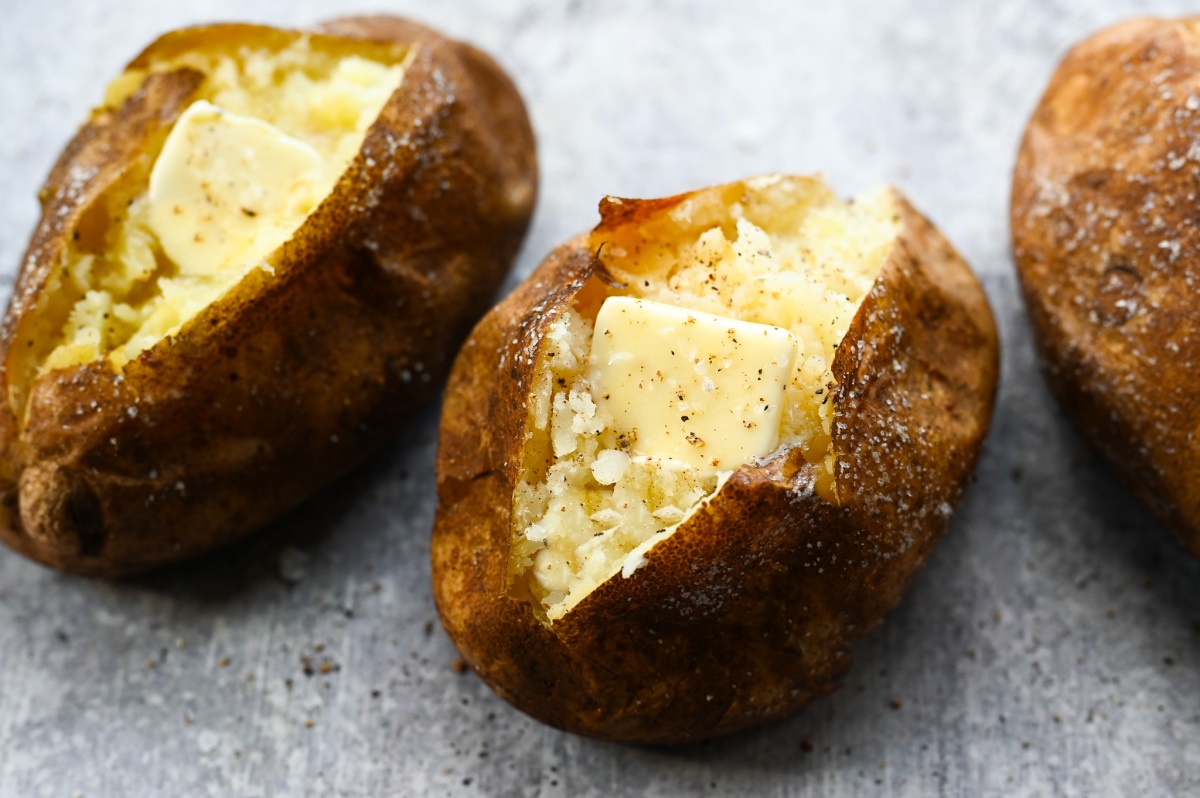
First up is the Russet Burbank. This is the potato equivalent of that kid in high school who was good at everything and made you feel slightly inadequate. It’s the default baked potato for a reason: it’s a starch monster. The Russet has a high starch content and low moisture, which means its insides turn into a cloud of edible cotton candy when baked. The skin gets crispy and golden because it’s dumb enough to let the heat do its job without crying for mercy.
If you’re making a loaded baked potato with cheese, bacon, and sour cream, this is your guy. It’s got the structural integrity to hold a pound of toppings without collapsing into a sad puddle. Fun fact: The Russet Burbank is so dominant that it accounts for about 70% of all potatoes grown in the United States. It’s the Taylor Swift of tubers—ubiquitous, slightly overplayed, but undeniably effective.
The Yukon Gold: The Buttery Imposter
Now, let’s talk about the Yukon Gold. This potato thinks it’s better than you because it has a naturally buttery flavor and a golden flesh that makes it look pretentious. It’s a medium-starch potato, which means it’s a jack-of-all-trades: good for roasting, mashing, and yes, baking. But here’s the catch: it won’t get as fluffy as a Russet. It’s denser, almost creamy, like a baked potato that secretly wishes it was a mashed potato.
You can absolutely bake a Yukon Gold, but you’ll end up with a more refined potato. It’s the kind of potato you’d serve at a dinner party when you want to look sophisticated but you’re too lazy to make actual fancy food. Just don’t expect it to hold a mountain of chili. It’ll buckle under the pressure—literally. Surprising fact: Yukon Golds were invented in Canada in the 1960s by crossing a North American potato with a wild one from Argentina. It’s basically a potato with dual citizenship.