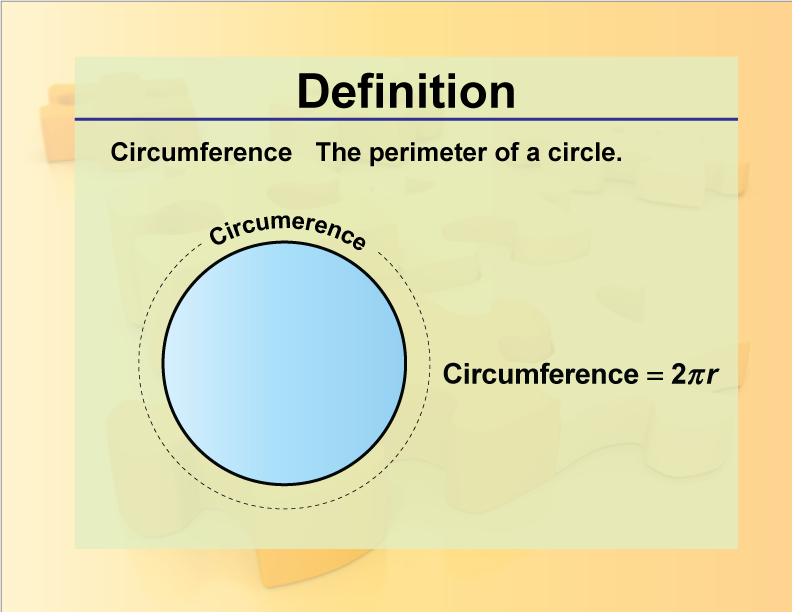
It's a fundamental concept in geometry, and it's used in tons of real-life applications, from designing wheels and tires to building bridges and canals. And, fun fact: the ancient Greeks were some of the first to study circumference, with mathematicians like Archimedes making major breakthroughs.
So, how do you calculate the circumference of a circle? It's actually pretty easy: you just need to know the radius (the distance from the center to the edge) or the diameter (the distance across the circle, passing through its center). Then, you can use the famous formula: C = 2πr, where C is the circumference, π (or pi) is a mathematical constant, and r is the radius.
But, here's the thing: pi is an irrational number, which means it can't be expressed as a simple fraction. And, that's what makes calculating circumference so interesting! You see, pi is approximately equal to 3.14, but it's actually a never-ending, non-repeating sequence of digits. Pretty cool, huh?

