
Most graphs have personality. Some are shy — they never cross the x-axis at all (looking at you, y = x² + 1, you antisocial parabola). Others cross it multiple times, like a drunk person trying to walk a straight line. Those are called roots or zeros, and they’re the same thing as intercepts, just dressed up for a fancier party.
Here’s a surprising fact: a line can only have one x-intercept, unless it’s a vertical line. Vertical lines are the divas of the graph world. Their x-intercept is the entire line itself, because y never matters — it’s always the same x. That’s like showing up to a costume party dressed as the entire party. Show-off.
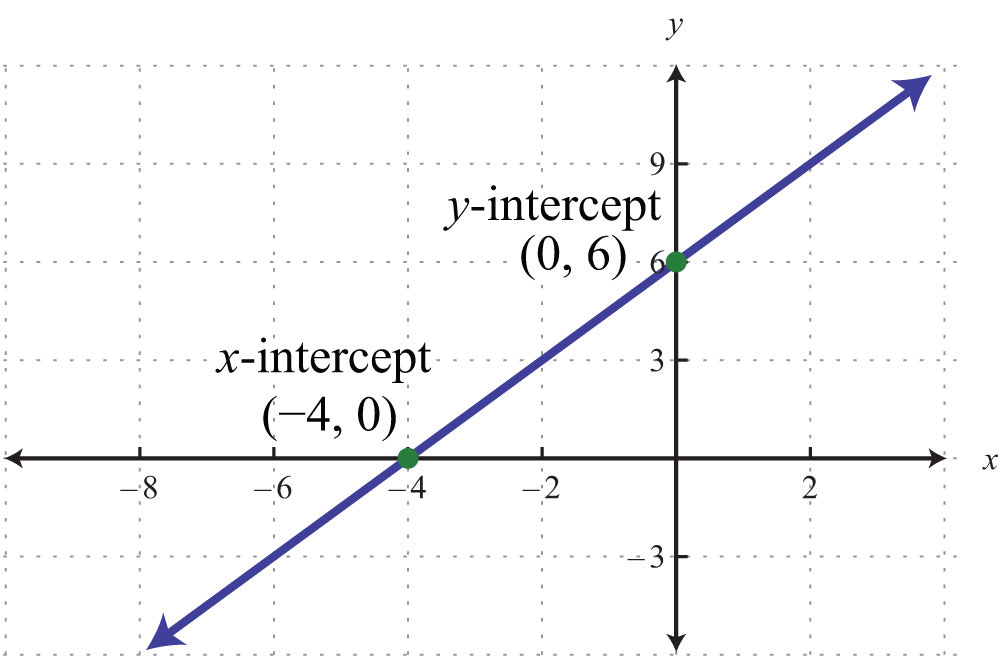 X Intercept Definition
How to find an x-intercept without crying
Grab your equation. Say it’s y = 2x - 6. Set y to zero. Now you have 0 = 2x - 6. Solve for x: add 6 to both sides, divide by 2, and boom — x = 3. The x-intercept is the point (3, 0). That’s it. You just did calculus’s annoying little cousin, and it only took three seconds.
If you’re looking at a graph, just find where the curve smacks the horizontal axis. It’s usually a dot, but sometimes it’s a tick mark. If you can’t find it, the graph is either playing hide-and-seek or it’s a polynomial with imaginary roots — which is just math’s way of being a drama queen.

