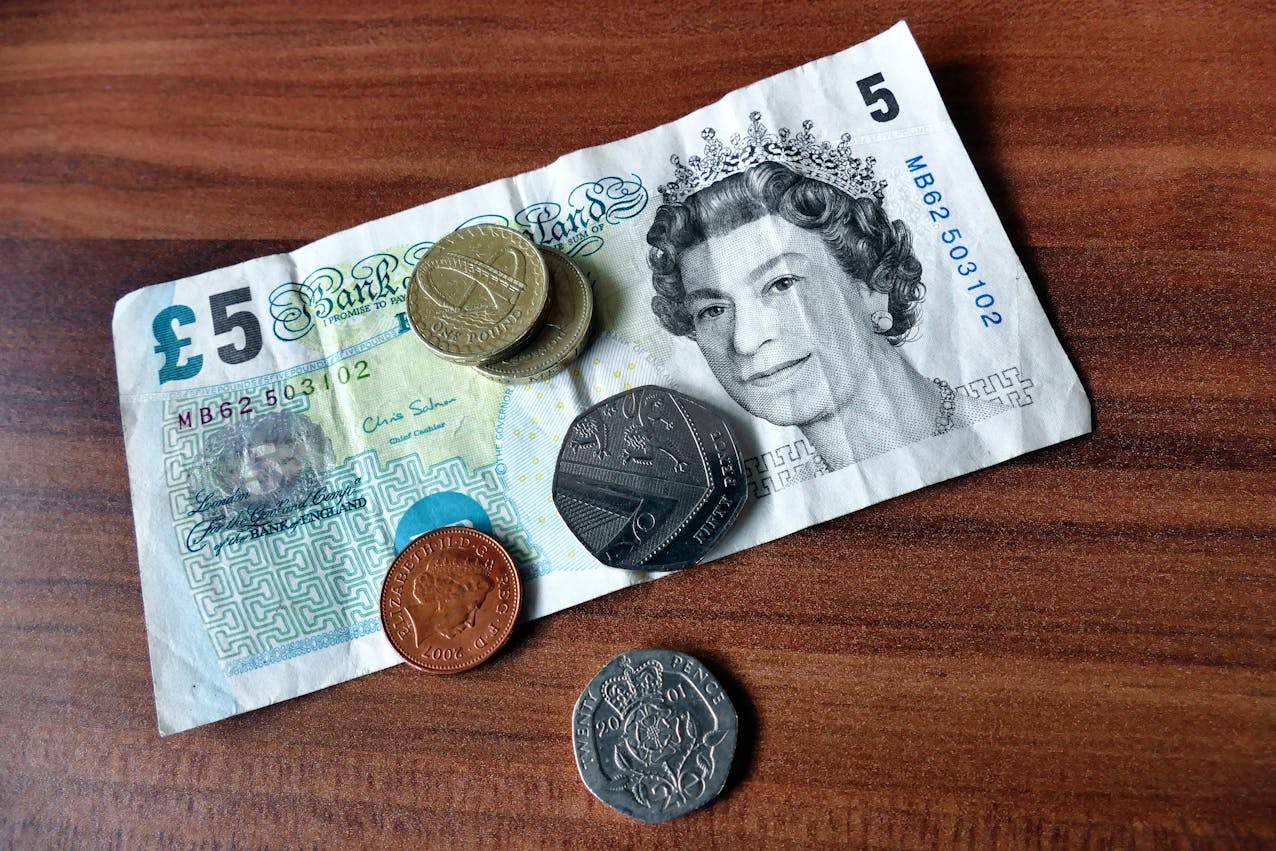
British coins are a glorious mess. You’ve got the 1p, 2p, 5p, 10p, 20p, 50p, £1, and £2 coins. The £1 coin is a thick, gold-colored beast with twelve sides. It looks like a gaming token from a fancy board game.
The £2 coin is even better. It’s bimetallic: gold center, silver ring. Flip it, and you might see gears, the Queen, or a poem about the Bard. Collect them all—it’s like Pokémon, but for small change.
Fun fact: the new 12-sided £1 coin was called the “most secure coin in the world.” Why? Because vending machines got tired of fake coins. London’s got serious coin drama.
 Understanding What is the Currency in the United Kingdom
Paper vs. Plastic: The Great Note Debate
Gone are the days of flimsy paper notes. Since 2017, British banknotes are made of polymer. That’s the same plastic as a shower curtain. They’re waterproof, stronger, and survive a spin in the washing machine. Go ahead, test that.
Each note has a famous British face. The £5 features Sir Winston Churchill (and a tiny image of Big Ben). The £10 has Jane Austen, with a quote from Pride and Prejudice. The £20 is painter J.M.W. Turner. And the £50? Alan Turing—the codebreaker who saved the world. Your money is a history museum you can spend.
Here’s a quirky detail: the notes have see-through windows and a holographic Big Ben. Hold one up to the light, and the bell seems to move. It’s a tiny magic trick for your wallet.