
Let’s play with this. At 0°C, a puddle turns into a slippery slide. But if you’re inside a warm house, 0°C feels like a brisk walk to the mailbox. It’s all about context.
Compare it to other substances: alcohol freezes at -114°C, so your vodka stays liquid in your freezer. Meanwhile, nitrogen freezes at -210°C—that’s alien-level cold. Water’s freezing point, at 0°C, is practically a cozy campfire by comparison.
Ever seen a spontaneous freeze? If you supercool water below 0°C and then shake it, it turns to slush instantly. It’s like water playing a prank on physics.
What About Impurities?
Here’s where it gets messy. Salt lowers the freezing point, which is why we salt icy roads. Pure water freezes at 0°C, but seawater freezes around -2°C. That’s a small but crucial shift.
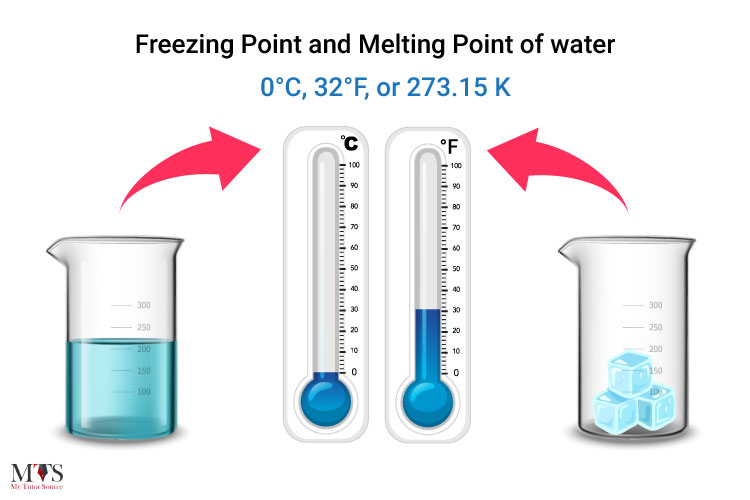 Freezing Point Of Water In Celsius
This is why your ice cream maker needs salt: it lets the brine get colder than 0°C without freezing, so your dessert turns creamy. Science is just delicious problem-solving.

