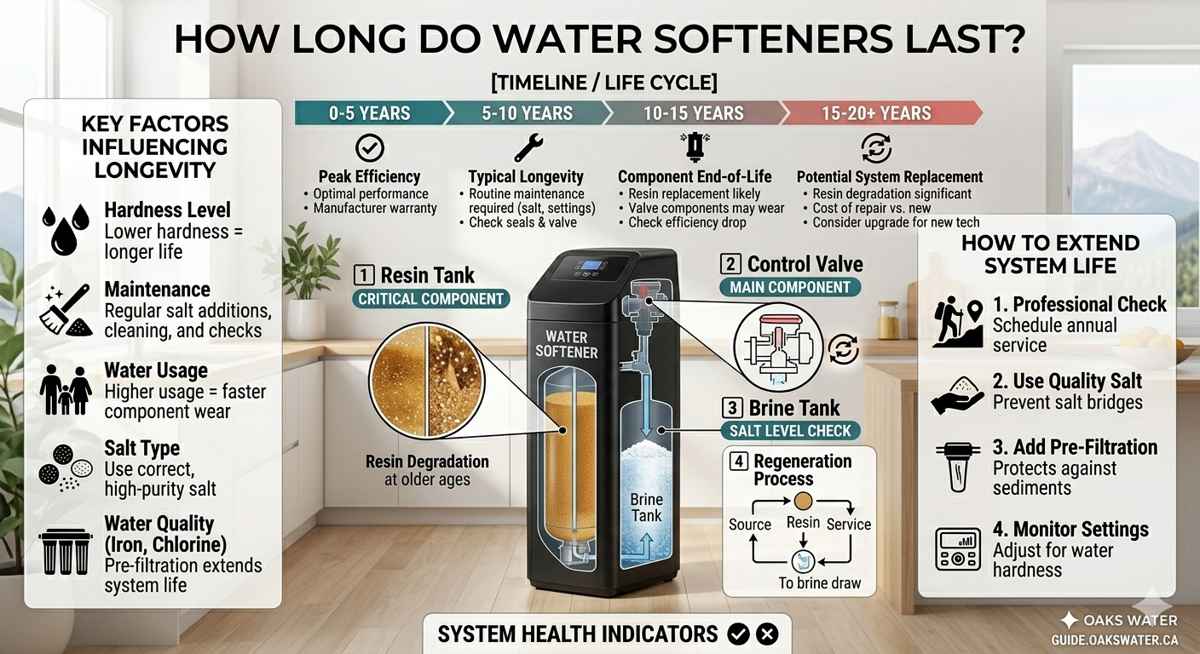
The biggest villain is hard water itself. If your water is ridiculously hard (like, “why does my soap turn to chalk?” hard), your softener works overtime. That constant cycling wears out the resin beads and valves faster.
Another sneaky culprit is iron and sediment. Think of them as tiny sandpaper particles that grind down your softener’s internals. If you’ve got rusty-looking water, you’ll need a pre-filter to save your softener from an early grave.
And let’s not forget salt quality. Using cheap, dirty salt is like putting low-grade gas in a sports car. It works, but you’ll get sludge and premature failure. Splurge on clean salt, your softener will thank you with a longer life.
The Main Parts That Die First
The resin beads are the heart of your softener. After years of swapping calcium for sodium, they can get worn out or coated in gunk. Most beads last about 10 to 15 years, but if your water is super hard, you might need to replace them sooner.
The control valve is the brain. If it’s mechanical, it can last decades. If it’s an electronic board, it might get fried by power surges or moisture. A $200 valve replacement can breathe new life into a softener that’s otherwise fine.
The brine tank (the salt holder) is basically a plastic bucket. It can crack or get salt-mush buildup over time, but it’s cheap and easy to swap out. Don’t let a broken tank kill the whole party.