
Then there’s sparkling mineral water. This is the fancy cousin who vacations in the Alps. It comes from a natural spring or well, and its minerals (calcium, magnesium, potassium) are naturally occurring. Not added later in a lab. Brands like Perrier or San Pellegrino? That’s mineral water, baby. It has a distinctive taste based on where it’s from.
So the chart in your head should look like this: Carbonated Water (the big family) – includes Seltzer (plain bubbles), Soda Water (bubbles + baking soda & salt), Club Soda (soda water’s twin with more minerals), and Sparkling Mineral Water (nature’s fancy bubbles).
Now, does this really matter in your everyday life? Probably not. If you’re mixing a cocktail, soda water (or club soda) is your pal because it enhances flavors without being too sharp. Seltzer is great for drinking straight—it’s crisper, cleaner, and makes you feel like a hydration champion.
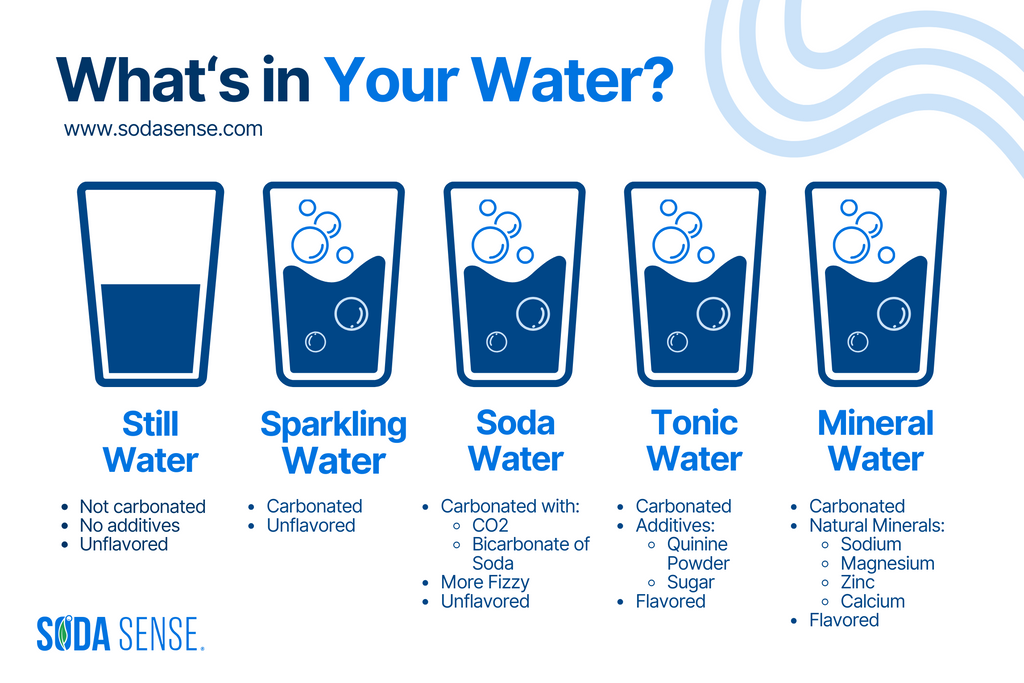 Soda Water vs Sparkling Water: What's the Difference? – Soda Sense
The Verdict: Which One Should You Buy?
Honestly? If you’re chugging from a can, grab seltzer. It’s cheaper, has zero ingredients, and does the job. If you’re making a fancy drink for a date? Use soda water. That tiny hint of salt makes your whiskey highball taste like you’re a mixologist, not a fraud.
And if you’re at a bar ordering a vodka soda, the bartender will almost always give you club soda or soda water. They never give you plain seltzer. Why? Because seltzer’s harsh bubbles ruin the delicate balance of cheap vodka and lime. Trust the bartender.
So next time someone asks, "What’s the difference?" you can lean in, wink, and say, "It’s all about the salt, my friend." Then watch their face go blank. Or they’ll be impressed. Either way, you’ve won the bubble war.
Now go forth and fizz. Just don’t call tonic water "carbonated water" unless you want to get thrown out of brunch.

