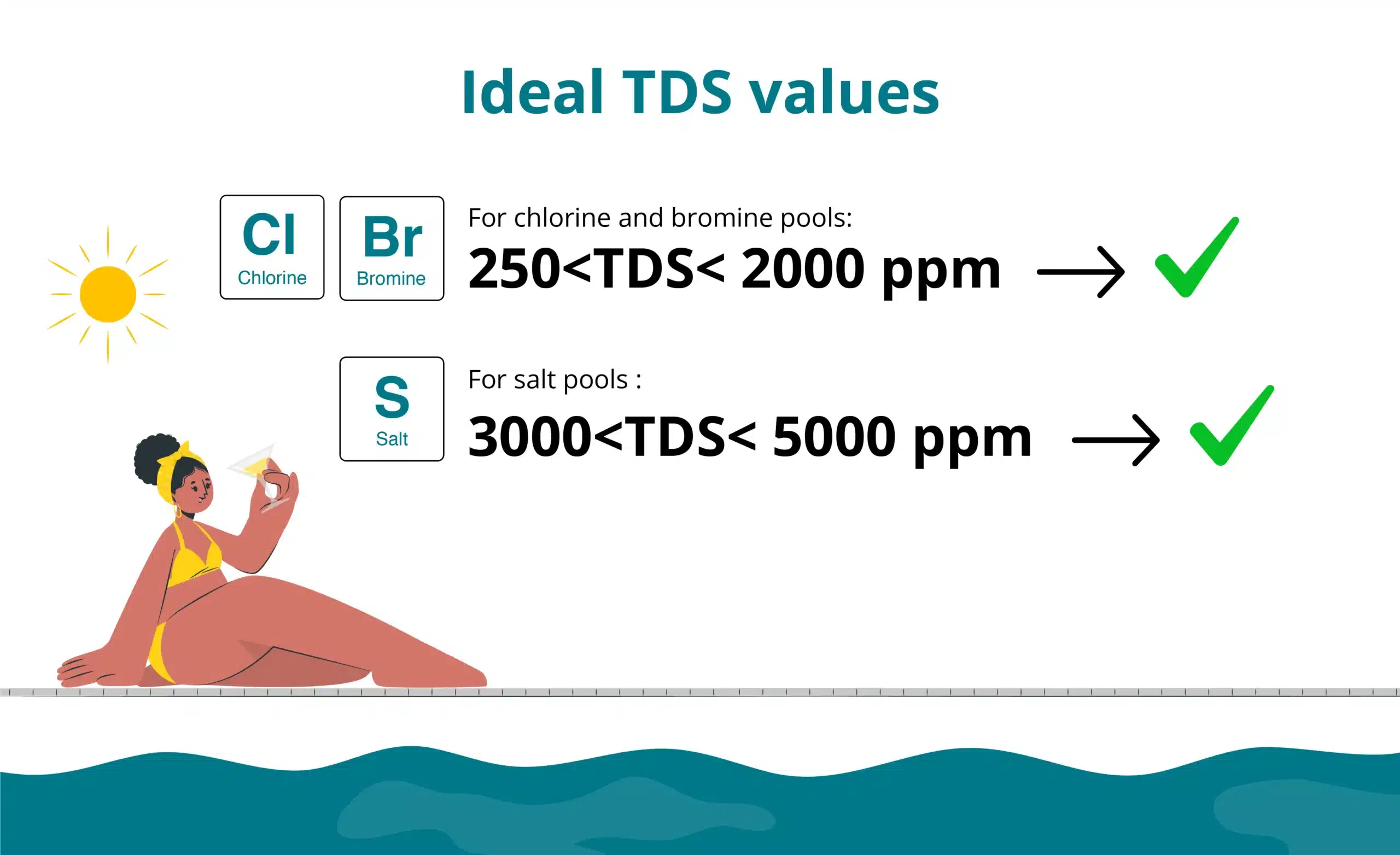
Tap water typically measures between 200 to 400 parts per million (ppm) of dissolved solids. A healthy pool should stay under 1,500 to 2,000 ppm. Once you cross 3,000 ppm, your water starts tasting like a bad relationship—slightly acidic, regretful, and you know it’s time to walk away.
But here’s the twist: saltwater pools run at much higher TDS, usually 3,000 to 4,000 ppm, because they use dissolved salt to generate chlorine. So a saltwater pool owner can’t panic at a high TDS number unless it’s over 6,000 ppm. That’s the pool equivalent of a salt-lick—good for deer, terrible for your hair.
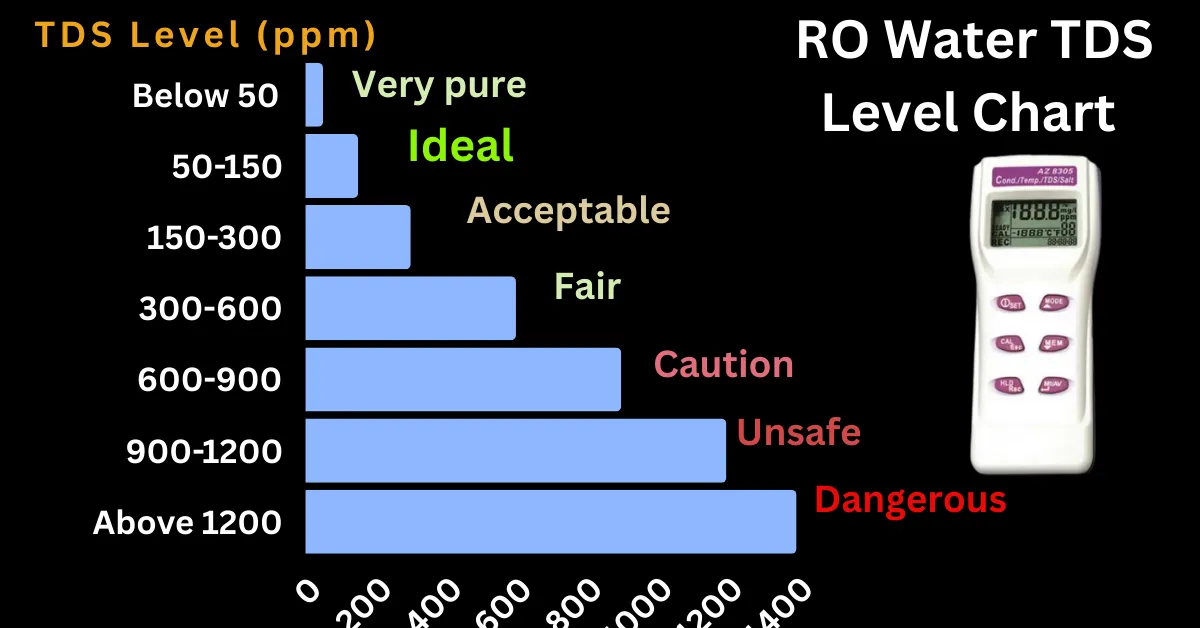 What Should Be The Tds Of Bathing Water
Wondering how to measure TDS? Buy a TDS meter—it looks like a weird thermometer for aliens but costs about $15 online. Dip it in, scream at the number, then decide if you need to drain. Or, if you’re old-school, you can lick the water and guess. Do not recommend. Your tongue will judge you.

