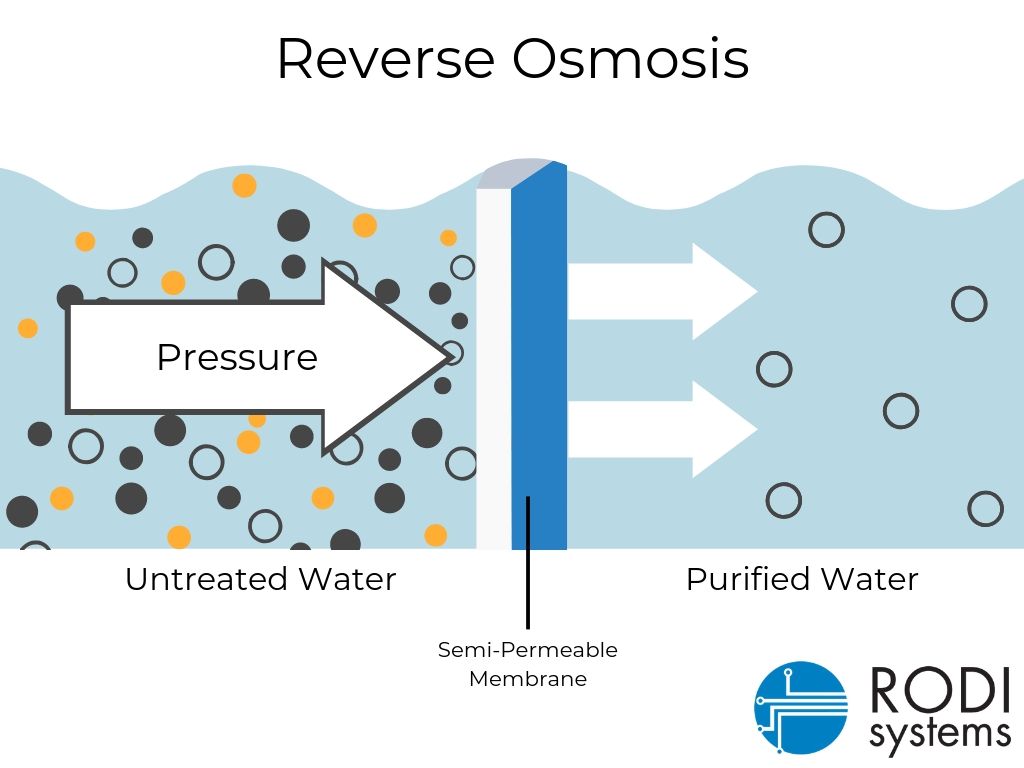
At its core, reverse osmosis (or RO, for those in the know) is water’s version of a super-strict bouncer at a club. It’s the guy who says, “Sorry, water molecules can come in, but you, lead, chlorine, and that weird mineral taste? Not tonight.” It’s like having a personal assistant for your water, one that’s incredibly picky and never takes a coffee break.
Imagine you have a really, really fine sieve. Now imagine pushing water through that sieve with so much force that only the tiniest particles—pure H2O—get through. Everything else—the bad guys like salt, bacteria, and the ghost of your old plumbing—gets left behind in a little puddle of concentrated shame.
The “Sugar in Your Coffee” Analogy
Think of normal osmosis. If you put a raisin in a glass of water, it plumps up because water moves into it. That’s natural osmosis—water likes to even things out. Reverse osmosis is the opposite. It’s like trying to un-plump that raisin by putting it in a pressure chamber and forcing the water back out. It’s aggressive, it’s messy, and it’s exactly what you want for your drinking water.
Your tap water has a bunch of dissolved junk in it, like a sad cup of forgotten tea. The RO system says, “Nope, we’re starting over,” and pushes that water so hard through a microscopic membrane that the junk gets left behind. What comes out the other side is so pure, it makes distilled water look a little smug.

