Here’s the fun part: ppm is like a secret detective for your water. Grab a simple TDS meter (they cost like $15), dip it in your glass, and you’ll see a number that reveals everything from hard water (high ppm) to soft water (low ppm).
Water at 0 ppm? That’s reverse osmosis water—so pure it tastes flat because all the minerals are gone. Water at 500 ppm? You’re basically drinking mineral water from a natural spring, with calcium and magnesium doing a happy dance in your glass.
And get this: ppm even explains why some water feels “slippery.” Soft water (low ppm) makes soap lather like crazy because there aren’t enough dissolved solids to fight the suds. Hard water (high ppm) leaves that chalky film on your skin. See? Science you can feel!
Fun Comparisons to Wrap Your Head Around
Let’s get visual for a sec. One ppm in water is like one second in 11.6 days. Or one inch in 16 miles. It’s almost nothing—and yet eveything changes at different ppm levels.
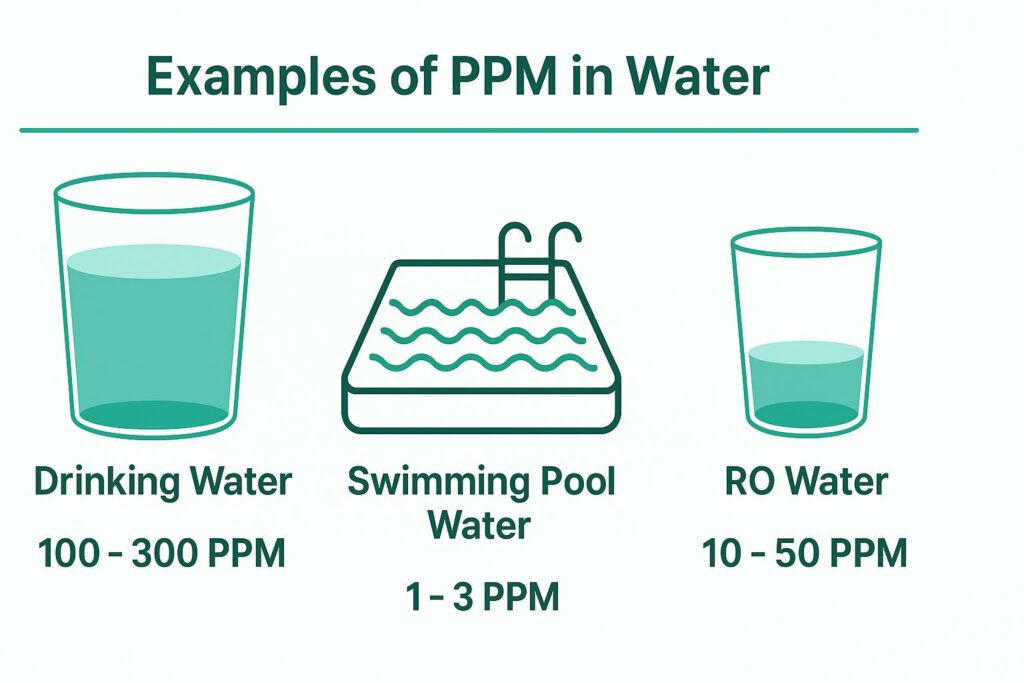 PPM In Water Quality – What Parts-Per-Million Means For Water Safety
Think about caffeine: a typical energy drink has about 350 ppm of caffeine. That’s enough to wake you up. But 1 ppm of warning chemicals in natural gas? That’s enough to make you run out of the house. Context is everything.
Even the ocean has a ppm story: seawater is about 35,000 ppm of salt. Drink that, and you’re in serious trouble. But a crisp bottled water at 200 ppm? That’s pure refreshment.