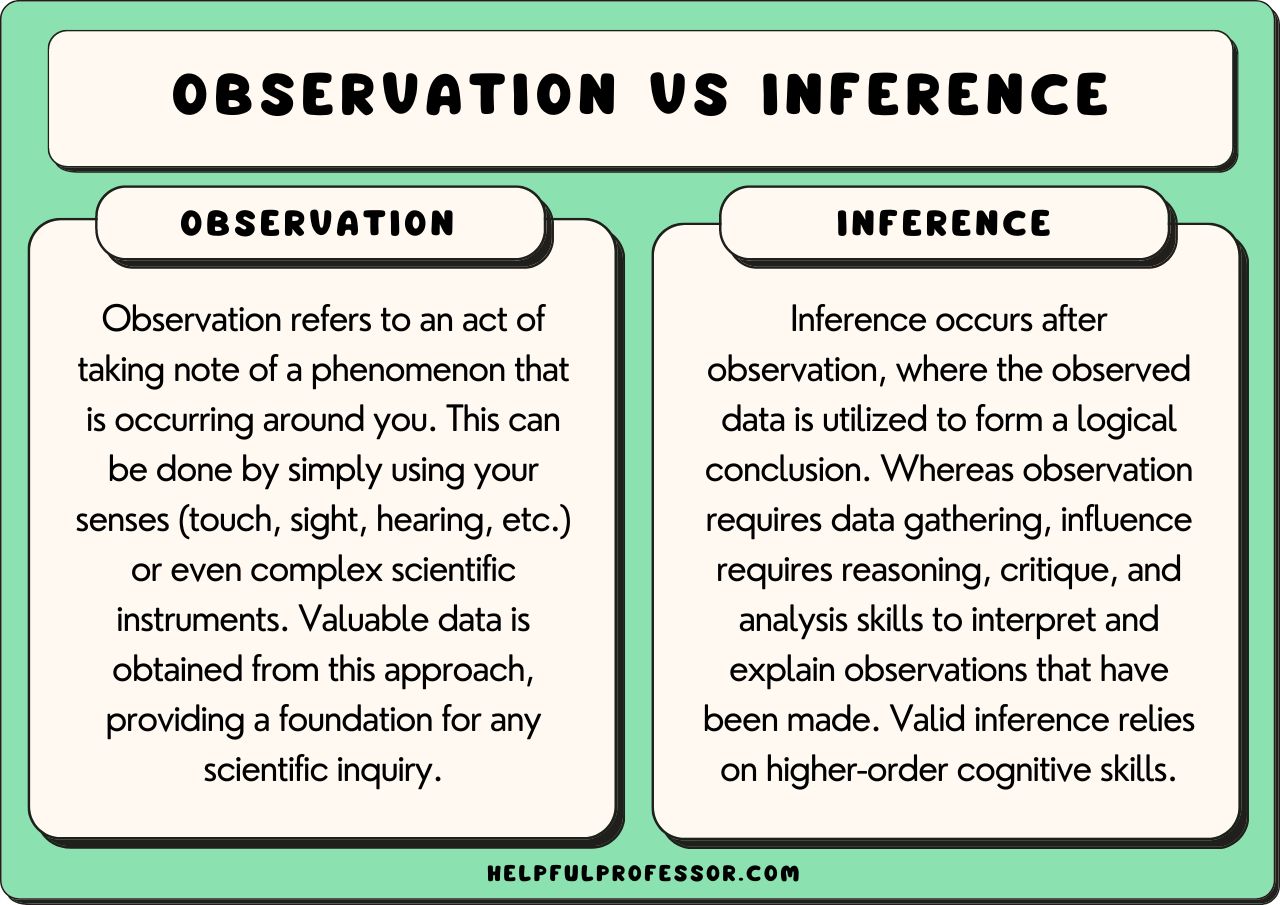
Scientists love their jargon, but inference is just a smarty-pants word for educated guesswork. Picture this: you walk into your kitchen and find a cookie jar knocked over, crumbs everywhere, and a tiny paw print on the counter. You didn’t see the culprit, but you infer it was your little brother—or a very ambitious raccoon. That’s inference in a nutshell: using clues (evidence) to tell a story you can’t directly watch.
In science, we do the same thing, just with fancier tools and fewer cookie crumbs. Scientists look at what they can observe—like a weird fossil or a flicker of light from a galaxy—and then infer what must have happened to make it. It’s basically the world’s nerdiest game of Clue, minus the candlestick and the ballroom.
The Secret Sauce: Evidence + Logic = Inference
Here’s the rule: an inference isn’t a wild guess. It’s a reasoned leap. If you say, “I bet aliens built Stonehenge because it’s old,” that’s a guess. But if you say, “The arrangement of stones aligns with the summer solstice, so ancient people probably used it as a calendar,” that’s an inference—based on evidence and logic. See the difference? One is a conspiracy theory; the other is science with a side of mystery.
Think of it like this: observations are the raw ingredients (flour, eggs, sugar). Inference is the recipe that turns those ingredients into a cake. You can’t eat the flour alone, but you can infer the batter will taste awesome if you bake it long enough. Just don’t eat the raw eggs. That’s poor science—and poor life choices.

