
If you’re a seltzer purist, you love that crisp, biting acidity. It’s why topo chico fans are so passionate—it’s extra fizzy, almost aggressive. Club soda fans argue that the mineral finish makes drinks taste more “complete.”
Try this at home: pour a glass of each, side by side. Seltzer will taste like nothing but carbonation. Club soda will have a faint, salty-mineral note—like a whisper of sea breeze.
For a cocktail, use club soda. The salts actually help blend flavors, especially in a gin and tonic or a highball. Seltzer is best when you want a neutral bubble—like in a whiskey soda, where the booze should shine alone.
A Fun Cultural Side Note
Ever noticed that seltzer is everywhere in New York delis, while club soda lives in fancy hotel minibars? That’s not an accident. Seltzer’s name comes from the German town Niederselters, which originally tapped natural mineral springs. Club soda was a 19th-century marketing invention, bottled for gentlemen’s clubs.
Today, the line is blurring. LaCroix and its fruity cousins are technically seltzer, but they’re sold as “sparkling water.” Meanwhile, generic grocery store brands often mix both terms. It’s a glorious, fizzy chaos.
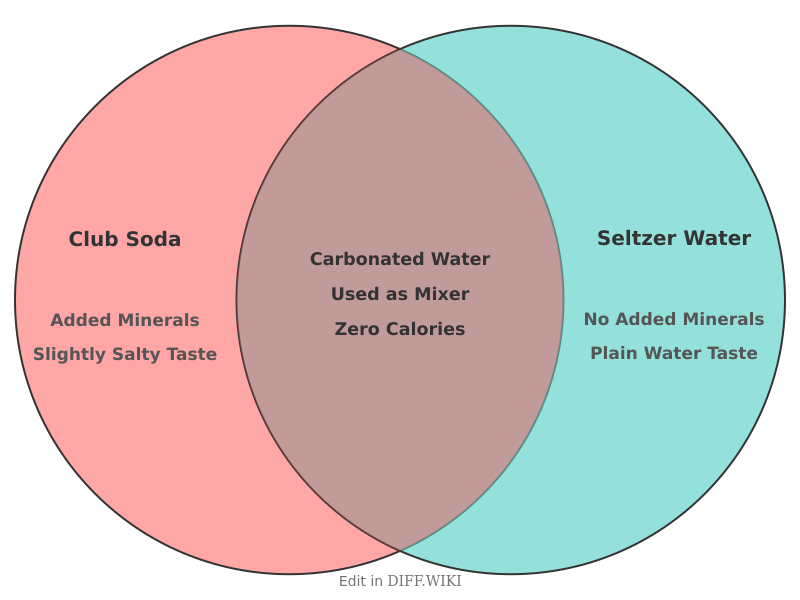 Differences between Club Soda and Seltzer Water - diff.wiki

