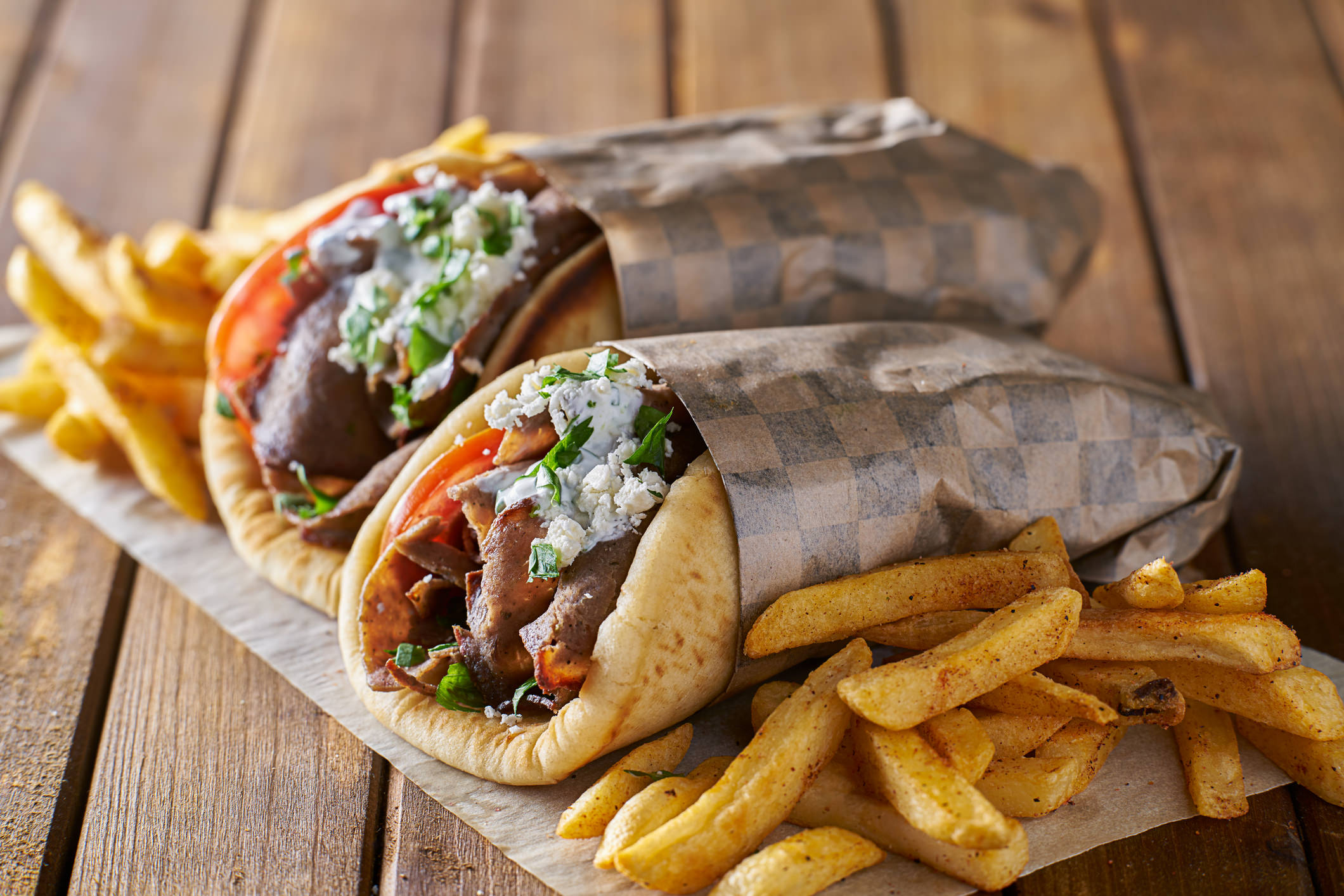
At its heart—and I mean its heart—the gyro is built around a vertical rotisserie of meat. Traditionally, it’s a blend of pork and lamb, stacked high like a meaty skyscraper. The secret? A perfect mix of fat and lean, seasoned with oregano, garlic, and enough salt to make a cardiologist wince.
As the spit spins, the outer layers get caramelized and crispy while the inside stays tender. It’s like a meat cake, except you never blow out candles—you just slice off the crust with a long knife. Some places use beef or chicken, but purists will tell you: pork is king. In Greece, they eat more pork gyros than any other country, consumed so fast you’d think they were racing a marathon.
The Pita: The Edible Blanket
Now, the meat is nothing without its cozy wrap. A real Greek pita is not a fluffy, puffball pocket—that’s for pita chips. A gyro pita is thin, soft, and slightly chewy, with a tiny bit of char from the grill. It’s basically a warm, floury hug that holds everything together while you try not to drip sauce on your favorite shirt (spoiler: you will fail).
But here’s a shocking fact: in Greece, they don’t wrap the gyro in foil like a burrito. They serve it open-faced or folded like a taco, and you eat it with a napkin the size of a tablecloth. Also, fries often go inside the pita. Yes, you read that right—fries in a sandwich. It’s carb-on-carb violence of the highest order, and it’s beautiful.
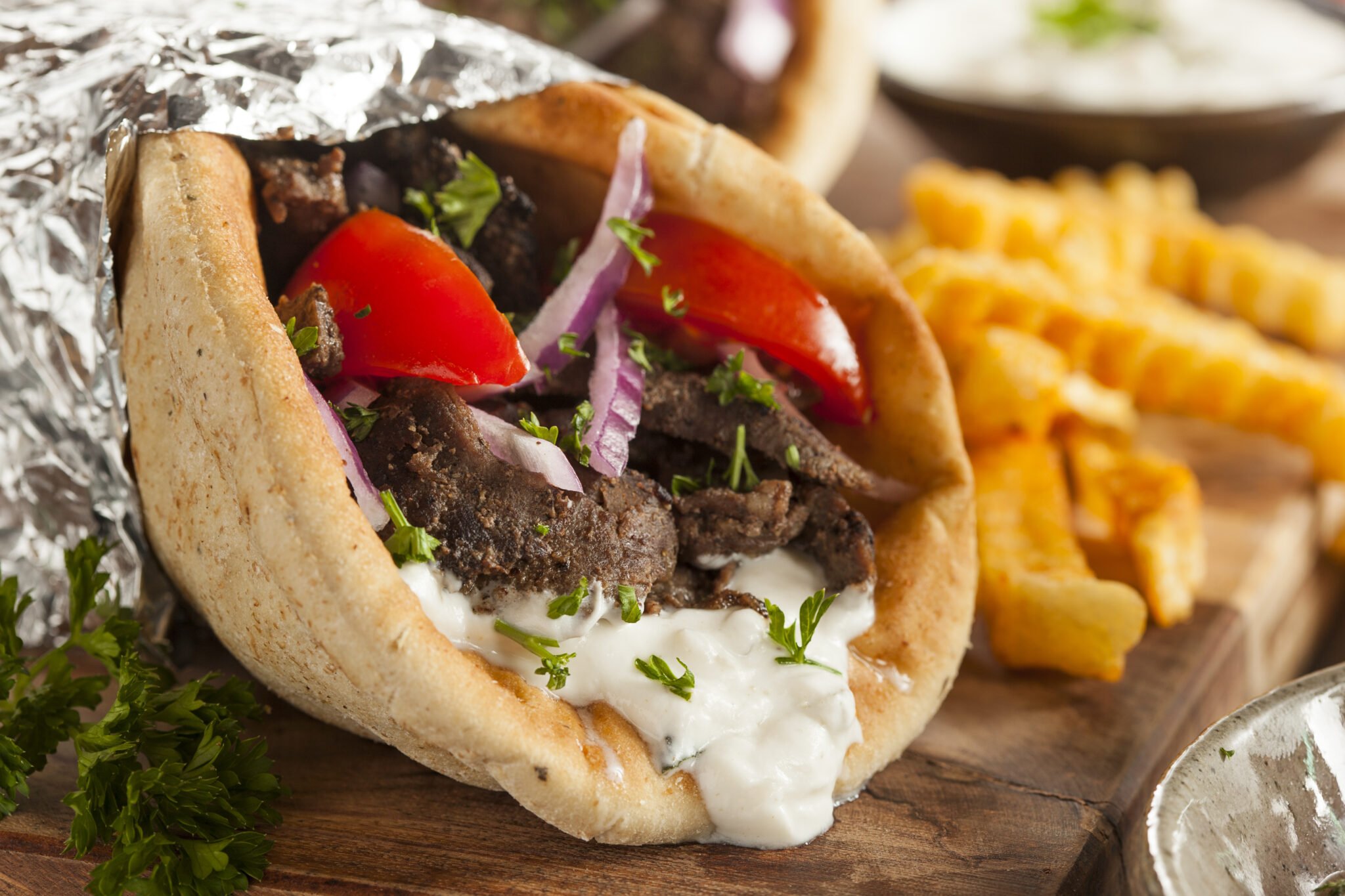 Lamb Meat Gyro