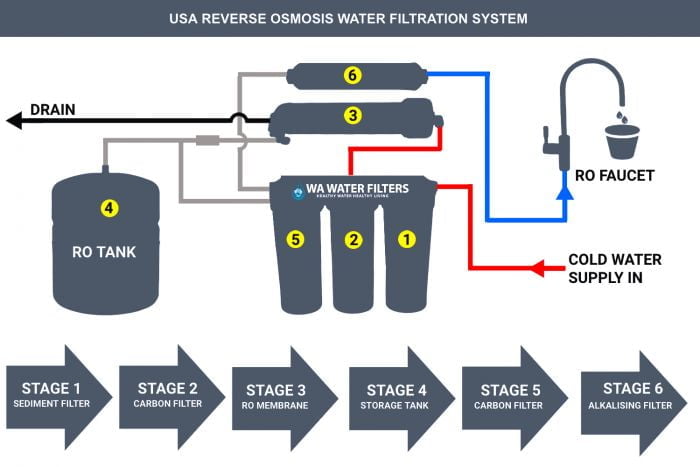
Imagine you have a sieve for spaghetti. The holes are big enough to let water through but catch the noodles, right? Well, a reverse osmosis membrane is a ridiculously tiny sieve. We’re talking holes that are 0.0001 microns wide. A human hair is about 70 microns wide, for context. So this thing is microscopic.
Water, under normal circumstances, likes to balance itself out—that’s called osmosis. But reverse osmosis says, “Nah, I’m going to push the water through anyway.” It uses household water pressure to force the water against the membrane. The clean water passes through, and the bad stuff—lead, chlorine, pesticides, and even those gross microplastics—gets flushed away down a drain.
The result? Water so clean it’s practically naked. No added flavors, no sediment, no weird aftertaste. Just crisp, clear, angelic water.
What does it remove? (Spoiler: a lot)
This system is a bully to contaminants. It removes up to 99% of dissolved solids, including arsenic, fluoride, salt, and heavy metals. It even wipes out some viruses and bacteria, though most city water is already disinfected. So, if your tap water tastes like a swimming pool, reverse osmosis is your new best friend.
It’s so effective that desalination plants use reverse osmosis to turn ocean water into drinking water. Yes, you can drink from the sea. Just don’t try it without one of these systems, or you’ll have a very salty, very regretful afternoon. (Ask me how I know. Just kidding, I don’t.)
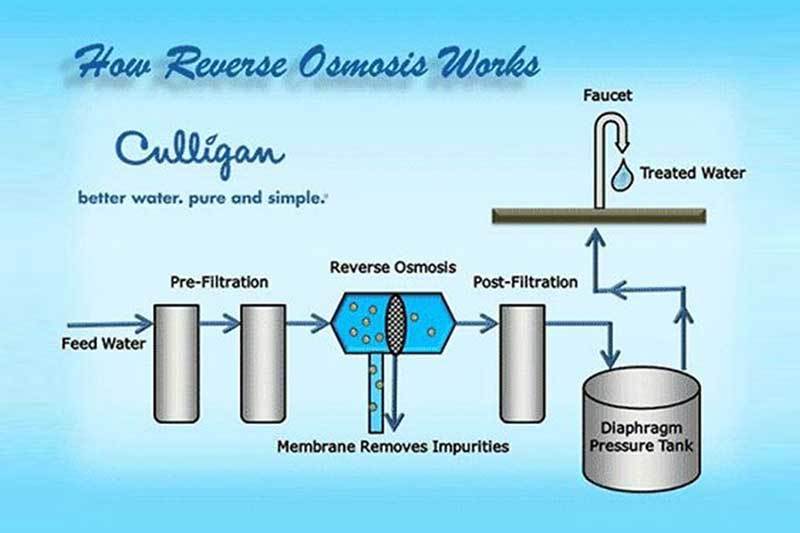 How Does A Water Filtration System Work

