
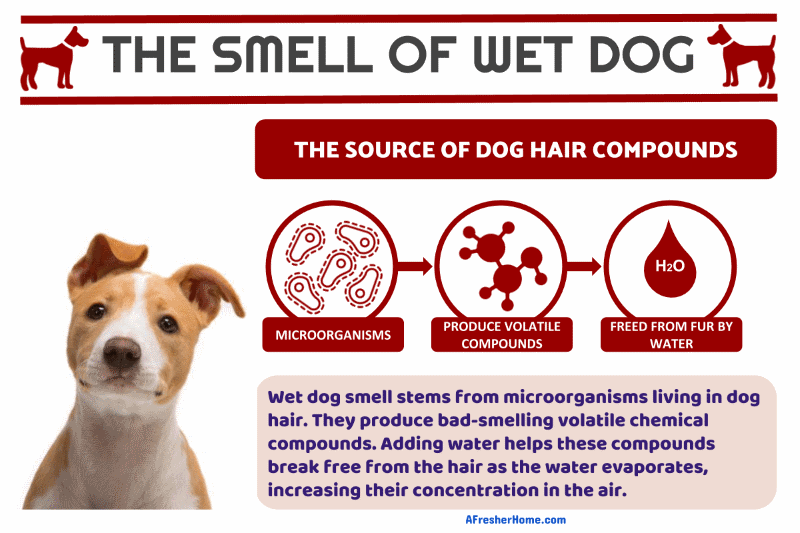
On a dry dog, yeast and bacteria are just quietly hanging out. They’re like teenagers on a couch, harmless enough. The moment water hits the fur, though, they release volatile organic compounds—VOCs, for the fancy folks.
These VOCs are the actual stink molecules that hit your nose like a soggy sock. The main culprits are microbes from the Pseudomonas and Proteus families, which produce that classic, eye-watering “wet dog” note.
And here’s the kicker: it happens fast. Within minutes of your dog diving into a lake or a suspicious puddle, the stink-o-meter hits eleven. It’s nature’s fastest-brewing stench.
The Scent Profile (Because It’s More Complex Than You Think)
Imagine you took a bag of damp corn chips, added a splash of stale beer, then threw in a hint of old gym socks that have been marinating in a muddy ditch. That’s the top note.
Underneath that, you get a base of yeasty bread dough that’s been left out for a week. But just as you think you’ve nailed it, a whiff of mushroom and something vaguely metallic—like a wet penny—pokes through. Delightful, right?
Interestingly, different dog breeds have slightly different notes. A Labrador’s wet-dog smell is earthier, like a damp forest floor, while a Poodle’s is more… perfumed? No, that’s a lie. It still smells like regret.
 Does An Air Purifier Remove Smells? Dealing With Common Odor Problems

