
Ask yourself: “Is this stock oversold because the market is having a tantrum, or because the business is actually broken?” There’s a huge difference. A broken business might never bounce back.
Check the news. Did the CEO get caught feeding the company’s money to their pet llama? That’s a real problem. But if it’s just a bad quarterly report, while the business is still solid? That’s when oversold starts to look interesting.
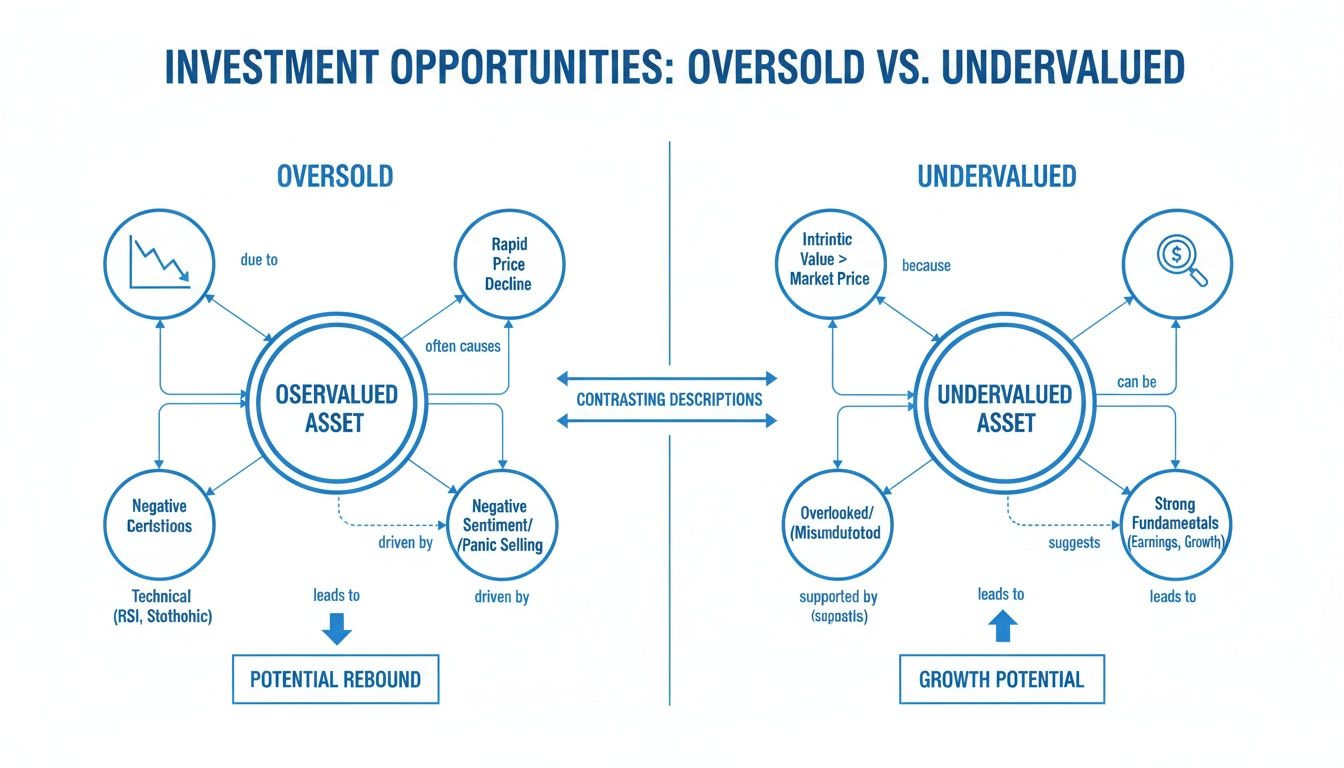 What Does Oversold Mean in Stocks and How to Spot It
You want convergence. That’s a fancy word for “the price is stupid low, but the company is still fine.” Look for positive earnings, strong cash flow, or a product people actually love. The stock is cheap, but the company isn’t.
Patience, young grasshopper.
The best time to buy an oversold stock is when it stops being oversold. I know, it sounds backwards. But wait for the RSI to turn up from below 30. Or wait for a “bullish divergence”—that’s when price makes a lower low, but the RSI makes a higher low.
That’s the market whispering: “The selling is losing steam.” It’s like watching a boxer who’s exhausted, still throwing punches, but his arms are noodles. That’s when you pounce, not when the first punch lands.
Also, never go all in. Oversold signals are hints, not guarantees. Buy a small piece. See what happens. You can always buy more later. Missing a bounce is better than catching a falling piano.

