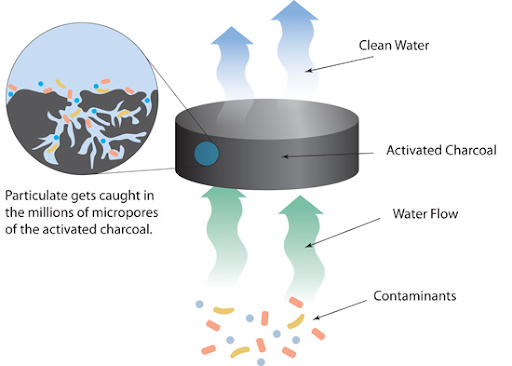
First, let’s clear the air: the charcoal in your filter isn’t the same as the briquettes you use for grilling. That stuff has additives to help it burn. Activated charcoal is a different beast. It’s been heated to extreme temperatures in a low-oxygen environment, creating a surface that’s unbelievably porous.
Picture a single gram of activated charcoal. Now imagine it having a surface area the size of a football field. That’s the secret sauce. Those millions of tiny pores act like a super-efficient magnet for impurities.
Fun fact: This process is called adsorption (with a ‘d’), not absorption. The contaminants stick to the surface of the charcoal like guests at a good party—they don’t get sucked inside, they get trapped on the walls. It’s the ultimate clingy situation, but in a good way.