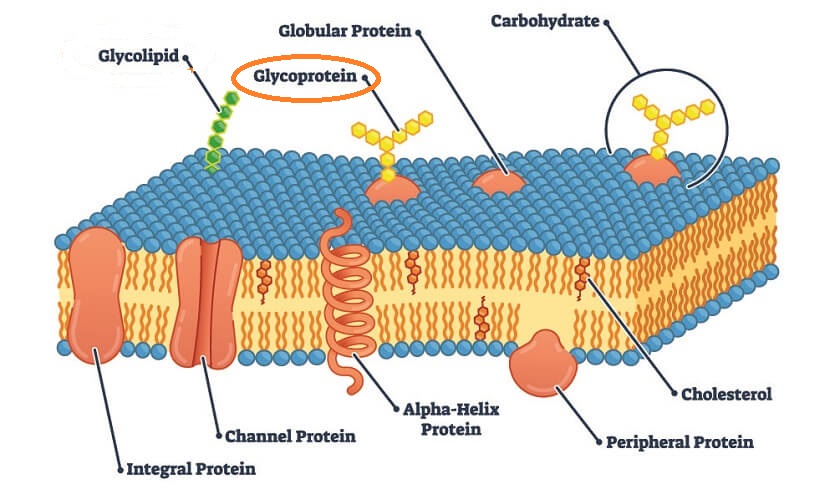
Break it down: “glyco” means sugar, and “protein” is, well, protein. So a glycoprotein is a protein with a sugar chain attached to it. That little sugar tail pokes out of the cell membrane, facing the outside world. It’s like a protein wearing a fashionable sugar hat.
Why sugar? Because sugars are incredibly diverse and can create millions of unique patterns. It’s the ultimate way for a cell to say, “Hey, I’m me!” without using words.
They Are the Cell’s Handshake and ID Card
Your immune system essentially reads these glycoproteins to decide if a cell is a friend or a foe. For example, your blood type—A, B, or O—is determined by specific glycoproteins on your red blood cells. It’s like a little tag that says, “I’m Type A, please don’t attack.”
When a virus tries to invade, it often latches onto these same glycoproteins. The virus tricks the cell by grabbing the sugar hat. That’s why the flu virus is so good at getting in—because our glycoproteins are like a welcome mat it knows how to use.
They Act Like Tiny Traffic Cops
Glycoproteins also help cells communicate. They can bind to other cells or to signals floating around, like hormones. This is how your cells know where to go and when to grow, or when to stop growing.
Think of them as tiny traffic cops directing the busy highway of your bloodstream. Without them, cells would bump into each other with no idea what to do, and chaos would ensue.