
Let’s be real: a standard carbon filter is not a superhero. It won’t remove hard minerals like calcium and magnesium, so your kettle will still get that white crust.
It also doesn’t touch dissolved salts, nitrates, or bacteria (unless it’s a special combo filter). Think of it as a good friend, not a miracle worker. It handles the taste and odor, but it won’t turn swamp water into Evian.
And lead? Most basic carbon filters aren’t certified for heavy metals. If you have old pipes, you need a specific filter designed for that. Always check the label—your water’s safety is worth the extra two minutes.
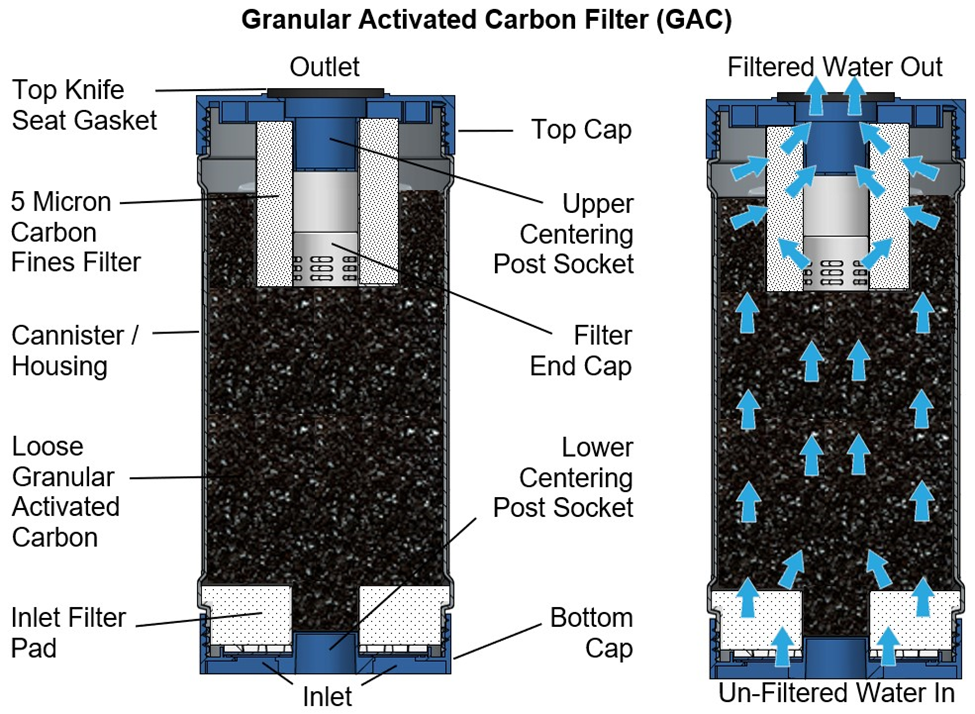 Granular Activated Carbon (GAC) vs. Activated Carbon Block (CB) Water
The Sediment Surprise
Some carbon filters also trap sediment: tiny bits of sand, rust, or silt that float around in your water. It’s like that weird grit at the bottom of a forgotten glass.
Ever noticed a strange, gritty texture when you rinse a mug? That’s sediment. Carbon filters catch that junk, so your coffee tastes smooth, not like a mouthful of playground sand.

