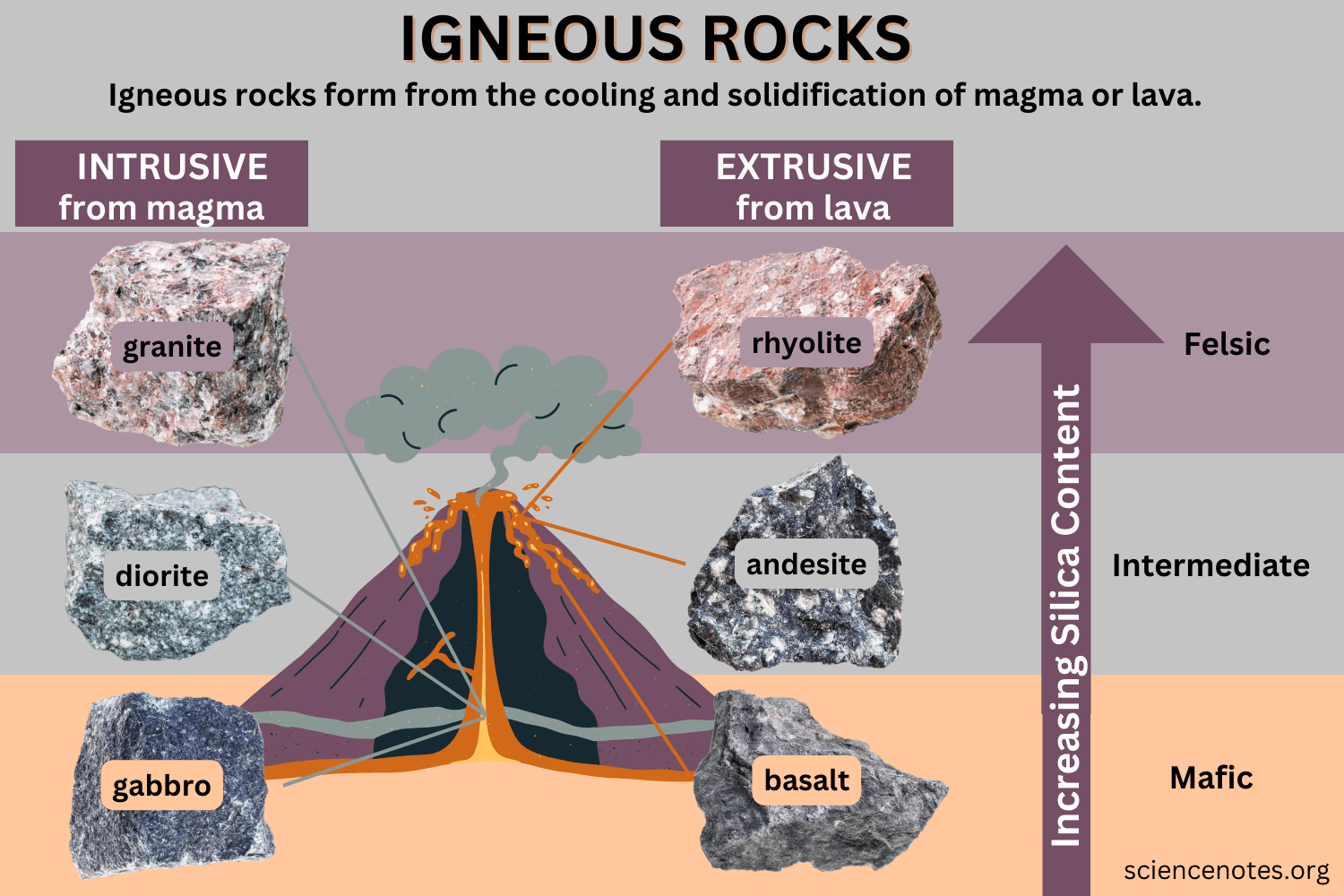
Not all igneous rocks are created equal because the magma composition varies wildly. The big player is silica (SiO₂). High-silica magma is thick, sticky, and tends to trap gas—creating explosive volcanoes. Low-silica magma is runny, like honey, and flows calmly.
If you find a light-colored igneous rock (like rhyolite or granite), it’s high in silica. Dark, heavy rocks (like basalt) are low in silica. Basalt, by the way, covers most of the ocean floor and even makes up parts of the Moon. So, yes, you’ve been touching space rock without realizing it.
 Term Used to Describe Rocks Formed From Molten Rock Material
What About the "Igneous" Name?
The word comes from Latin ignis, meaning fire. Ancient people saw volcanoes and assumed the rocks were forged by underworld flames. They weren’t wrong—the heat is real. But there’s no fantasy here, just physics and chemistry.
Next time you see a solid rock, remember: it was once liquid, swirling and angry. And it took an eternity (or an afternoon) to chill out.