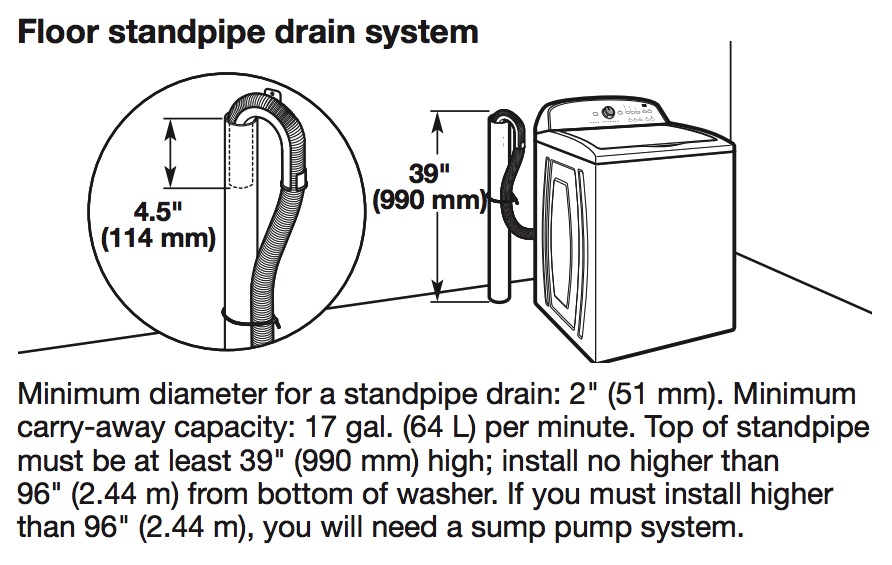
Grab a tape measure and a friend—or just your phone’s camera for a selfie of the setup. Look for the little plastic “U-bend” clip that came with your machine; it’s designed to hold the hose at the correct height.
Fun fact: Many modern machines have a siphoning break built into the hose. This is a small air gap that stops backflow even if the pipe is slightly low. Check your manual—you might already be protected.
If your drain pipe is too low, a simple fix is using a hose hanger bracket (a few bucks at any hardware store) to physically raise the hose loop. Attach it to the wall behind the machine at the 30-inch mark.
When things go sideways (and wet)
Ever heard the phrase “the washing machine ate a sock”? That’s a myth. But “the washing machine flooded the kitchen” is a real Saturday story. It happens when the drain pipe is clogged or incorrectly routed.
Another classic tragedy: the “water hammer.” That loud bang when your machine finishes a cycle is often caused by the pipe being too high and air getting trapped. It sounds like a ghost, but it’s just bad height planning.
Anecdotal evidence from my neighbor: He installed his machine in the basement and ignored the height rule. His drain pipe was at 12 inches. Every cycle ended with a lake. He bought a 4-inch riser kit for $20. Problem solved.