
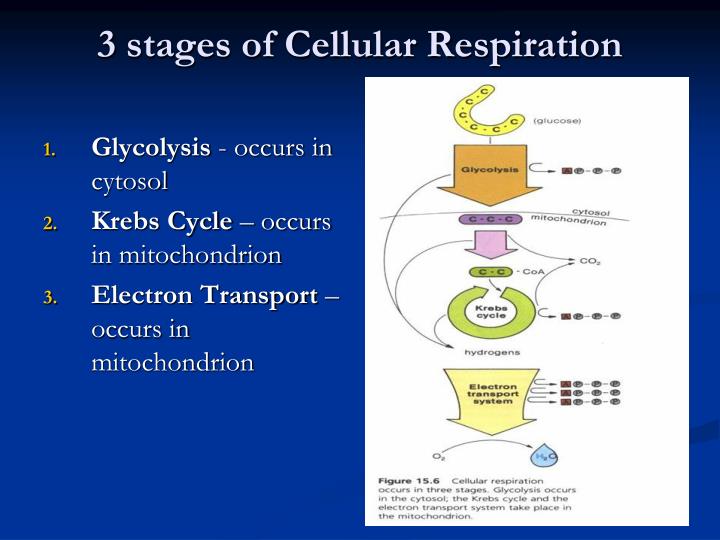
Now that we have our two pyruvate pieces, they can’t just sit around. They’ve got places to go! They get shipped into the mitochondria—the cell’s power plant, or as I like to call it, the energy kitchen. First, they get transformed into acetyl-CoA, a petite little molecule ready for the next ride.
 The Three Main Stages Of Cellular Respiration – VIEZK
Welcome to the Krebs Cycle (also known as the citric acid cycle—don’t let the fancy name scare you). This guy spins in a circle like a dizzy hamster on a wheel. It takes that acetyl-CoA and chews it up into carbon dioxide, which you’ll eventually just breathe out. (So yes, you’re literally exhaling pizza fumes. Cool, right?)
Along the way, the cycle squeezes out more energy tokens: more ATP, more NADH, and another carrier called FADH₂. It’s like a money-making carousel—you put in one thing, and you get back a handful of shiny coins. No oxygen is used yet, but the stage is set for the real fireworks.

