
Let’s break it down. A strong introduction has three moves. First, it hooks you—a weird fact, a bold statement, a tiny story (like my Peru disaster). Second, it creates curiosity. You should be thinking, “Wait, what does that have to do with anything?”
Third, it gives a roadmap—but a vague one. Not “I will talk about A, B, and C.” More like, “We’re going to explore why your morning coffee might be lying to you.” That sets a direction without revealing the punchline. You’re drawing a map, not reading the travel log.
And for the love of all that is holy, do not start with a dictionary definition. Unless you’re writing for a legal textbook, nobody wants to hear, “According to Merriam-Webster, a summary is…” It’s the fast track to making your reader click away. (If you do this, I can’t help you.)
When a Summary Actually Belongs
Okay, I’m not here to trash summaries. They have a sacred place. You use a summary at the end of a chapter, in an abstract for a research paper, or when you’re recapping a long meeting for a busy boss. It’s for people who need the “tl;dr” version because they don’t have time for the journey.
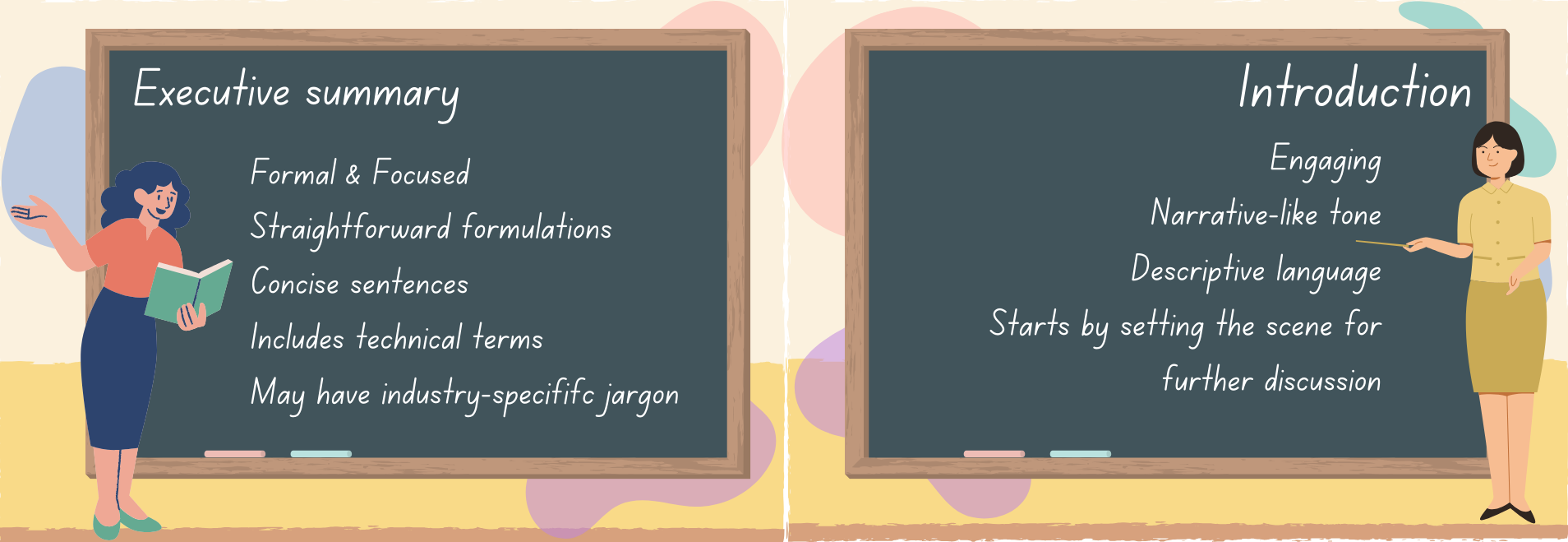 Resumo Executivo vs. Introdução: Principais Diferenças
But an introduction? That’s for people who have time, or at least want to make time for your writing. If you hand them the summary first, you’re essentially saying, “Here’s the answer, no need to read the rest.” Don’t shoot yourself in the foot like that.
Think of it like a first date. You don’t walk in and say, “So, I’m going to tell you about my childhood, my job, and then I’ll ask you to marry me.” You introduce yourself with a vibe, a joke, maybe a story. The summary of how the date goes comes later—to your best friend over brunch.

