First off, slugs love moist, dark places—exactly like the gap under your fridge or the crack near your sink at night. They’re nocturnal, so while you’re dreaming, they’re exploring your countertops, cutting boards, and even your clean dishes. I know, I know—gross again. That trail of slime isn’t just annoying to step on; it can contain bacteria like Salmonella and E. coli picked up from who-knows-where they crawled outside.
But here’s the kicker: slugs can carry rat lungworm (scientific name: Angiostrongylus cantonensis). Sounds dramatic, right? It is. This parasite can cause meningitis in humans if ingested. Don’t panic just yet, but also, maybe don’t let your toddler play with the slug they found under the table. You get the idea.
The Unseen Danger—And Why Night Time Is Prime Time
Think about your kitchen at 3 AM. It’s quiet, damp from that last load of dishes, and there’s usually a crumb or two waiting. Slugs have a superpower: they can squeeze through gaps as thin as a credit card. Yes, really. That means they’re not just visitors; they’re residents you didn’t know you had.
The real danger isn’t a slug bite—they don’t bite humans (thank goodness). It’s that they crawl over your food prep areas and leave behind pathogens invisible to the naked eye. Imagine slicing an apple on a board they crossed an hour earlier. Not exactly the midnight snack you wanted, huh?
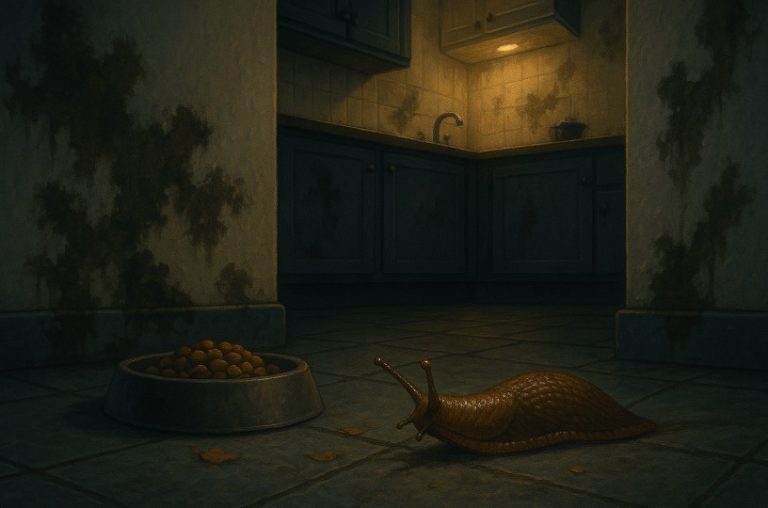 Why Are Slugs Coming in My House at Night? Causes & Prevention Tips
But Is It Actually Dangerous or Just Disgusting?
Let me be honest with you—for most healthy adults, the odds of getting seriously sick from a slug encounter are low. Still, low odds aren’t zero odds. For people with compromised immune systems, children, or the elderly, that slime trail can be a genuine risk. And let’s not forget: slugs also attract other pests like beetles and centipedes. Suddenly, your “one slug” becomes a chain reaction of nope.
I’ve seen people shrug and say, “Oh, it’s just a garden pest.” But your kitchen is not a garden. You don’t eat salad off the soil, I hope? So yes, that nightly slug is a sign you’ve got a moisture problem or a tiny entry point—and that’s the real danger you should fix.