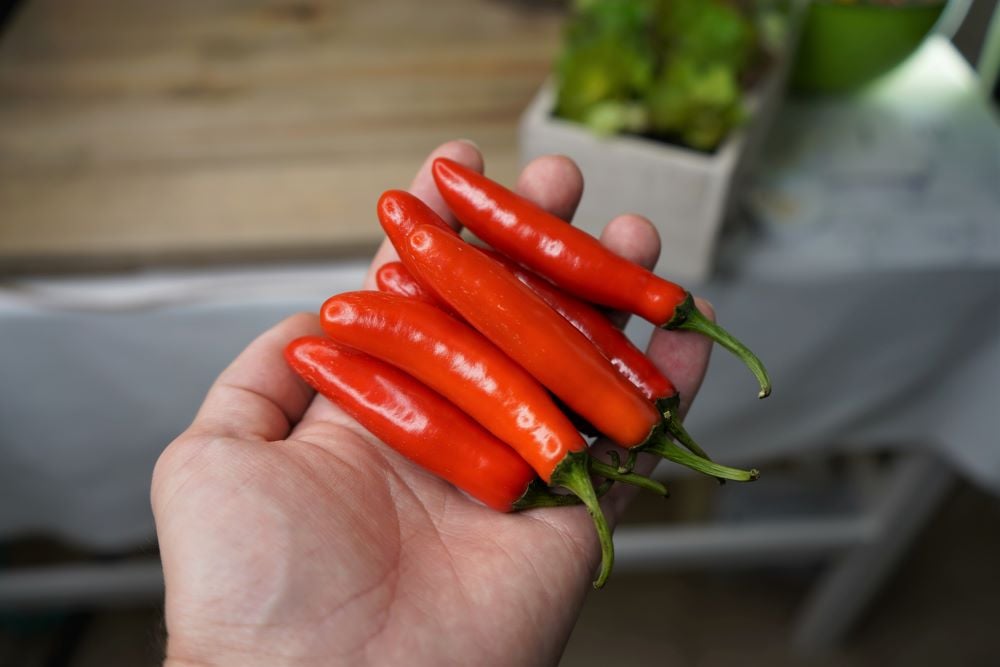
You don’t really need to do anything for this transformation to happen. Just leave the pepper out at room temperature, like you’re waiting for a friend who’s “almost here.” The pepper will slowly change from green to orange to a deep, almost ruby red. It’s nature’s slow-motion magic trick, and you get to be the confused audience member.
If you put it in a paper bag with a banana, it goes faster—like a speed date that turns serious by the end of the hour. But honestly, the lazy method works fine. I’ve had serranos that took over a week to fully redden, and I swear they looked smug about it.
 Red Serrano Pepper
What You’re Actually Getting
A red serrano is a completely different beast in the kitchen. Slice one open, and the flesh is almost fleshy-candy-like, with a hint of sun-dried tomato energy. It’s perfect for salsas that need a little “I meant that” at the end. You can roast it, pickle it, or just eat it raw if you’re feeling invincible (and have milk nearby).
But here’s the catch: it’s also about twice as hot as its green self. Imagine the green pepper is a gentle push on a swing. The red one is that swing coming back and hitting you in the shins. Respect the red, or you’ll be crying into your guacamole.

