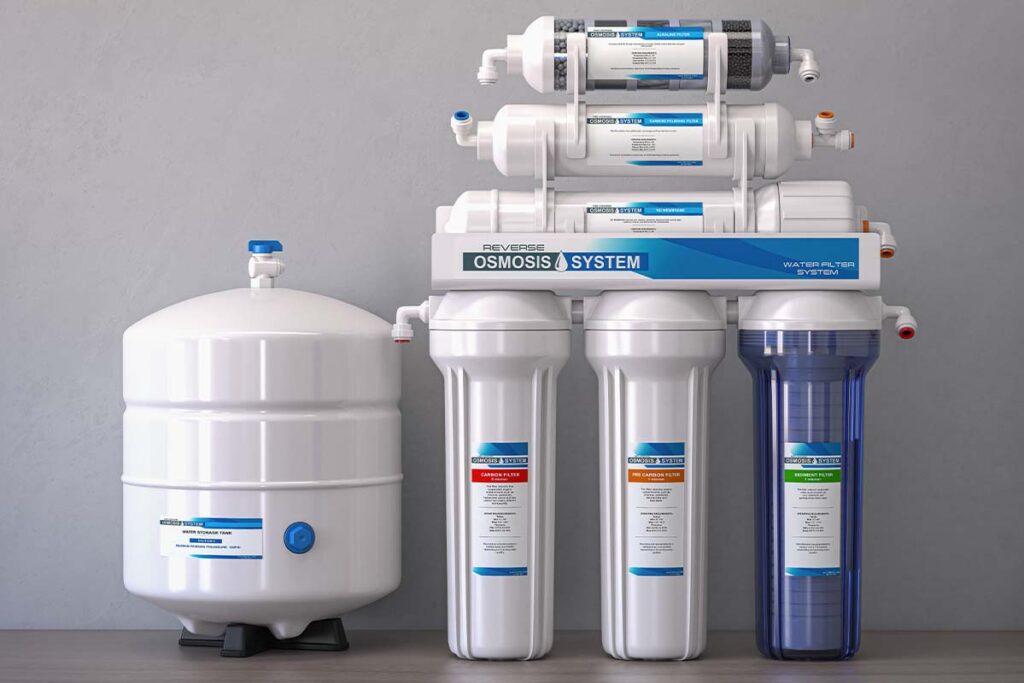
Imagine your tap water is a party with a bunch of unwanted guests—stuff like lead, chlorine, pesticides, and even microscopic bacteria. A Reverse Osmosis system is basically the bouncer at that party, kicking all the riffraff out and letting only the pure, crisp H2O through.
It’s not magic, though it feels like it. RO uses a super-fine semi-permeable membrane that’s so picky, it even filters out stuff you didn’t know existed—like fluoride and arsenic. Your taste buds will throw a party of their own when they get that clean, neutral flavor.
How the Heck Does It Work?
Okay, let’s break it down without getting all science-y. You’ve got three main parts: a pre-filter, the RO membrane, and a post-filter. The pre-filter catches the big stuff, like sand or rust, so the membrane doesn’t get clogged and throw a tantrum.
Then, water gets pushed through the membrane at a decent pressure, and this is where the magic happens. The membrane has teeny-tiny pores that let water molecules pass, but it blocks everything else—dissolved salts, heavy metals, even that weird medicine taste from old pipes. What’s left behind is a concentrated “brine” that flushes down the drain, so you never have to deal with it.
Finally, the post-filter polishes the water, making it taste like it came from a mountain spring—minus the hike and the bear risk. And voilà! You’ve got water so pure, your ice cubes will look like tiny diamonds.

