
On the day, wear comfy clothes. No need to dress up. You’re not meeting the Queen; you’re proving a point. If your jeans hurt because of a condition, wear joggers. If your socks are a struggle, go barefoot. Own it.
Arrive early, but not too early—you don’t want to sit in the waiting room stewing in anxiety. Bring water, a snack, and your pain relief if allowed. Also, bring your list. Do not rely on memory alone—it’s a sneaky little gremlin that hides your worst moments under stress.
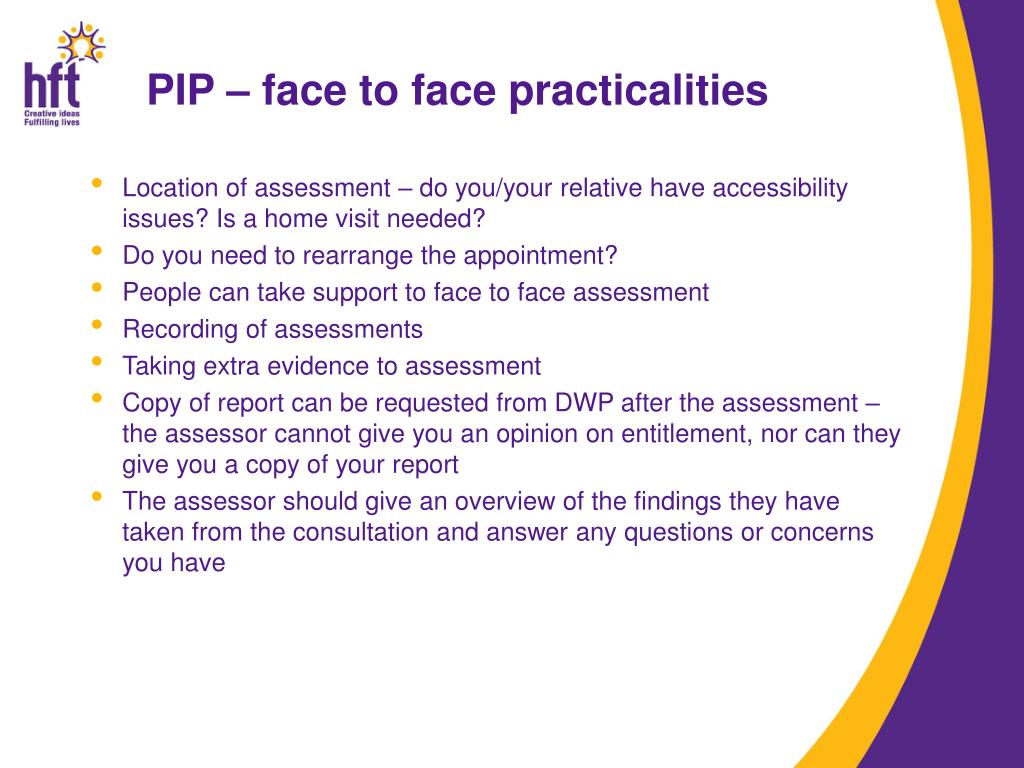
If you’re feeling wobbly, it’s okay to bring a friend or family member. They can remind you of stuff you forgot, like that time you couldn’t get out of the bath. Just warn them not to interrupt too much—let you do the talking.
 PPT - Top tips for PIP PowerPoint Presentation, free download - ID:2887430
Inside The Room: The Actual Chat
The assessor will introduce themselves. They might smile. Smile back—it calms the nerves, and it’s polite. The room is usually small, with a desk, a chair for you, and maybe a plant that looks very bored.
They will ask you about your condition, your medication, how you get around, and how you manage at home. Be honest. Don’t be a hero. If you can’t cook a meal without sitting down halfway through, say it. If you need help washing your hair, don’t brush it off as “no big deal.” Every detail matters like a detective puzzle piece.
Here’s a secret: they might ask you to do a simple task, like standing up from a chair or reaching for a pretend shelf. Don’t over-perform. If it hurts, say it hurts. If you need to stop, stop. They’re watching how you move, not judging your fitness level. Though if you drop something, maybe don’t blame the ghost.

