
First thing you notice is the texture. The walls don’t just feel like walls; they feel like a puzzle you want to solve with your fingertips. You’ll spot a piece of a blue teacup next to a shard of green bottle, and then a tiny mirror that catches your own surprised face. It’s like the house collected bits of everyone’s old dishware and gave them a second life—no judgment, just glitter.
Outside, the mosaic covers the porch, the steps, and even the mailbox. Seriously, the mailbox has more personality than most people’s Instagram feeds. There’s a mosaic table and chairs where you could sit and pretend you’re having tea with a unicorn. The whole place feels like a secret you stumbled upon while trying to find a gas station bathroom.
The man behind the madness
George Ehling wasn’t a famous artist or a guy with a trust fund. He was just a regular fella who loved to tinker and had a serious patience for tiny pieces. Legend has it that he’d walk around the neighborhood, collecting broken plates from neighbors who’d say, “Here, take this chipped saucer—I don’t want it.” He’d take it home, break it into bits, and find its perfect spot. Sound familiar? That’s basically what we do with leftovers on a Tuesday, except his leftovers became art.
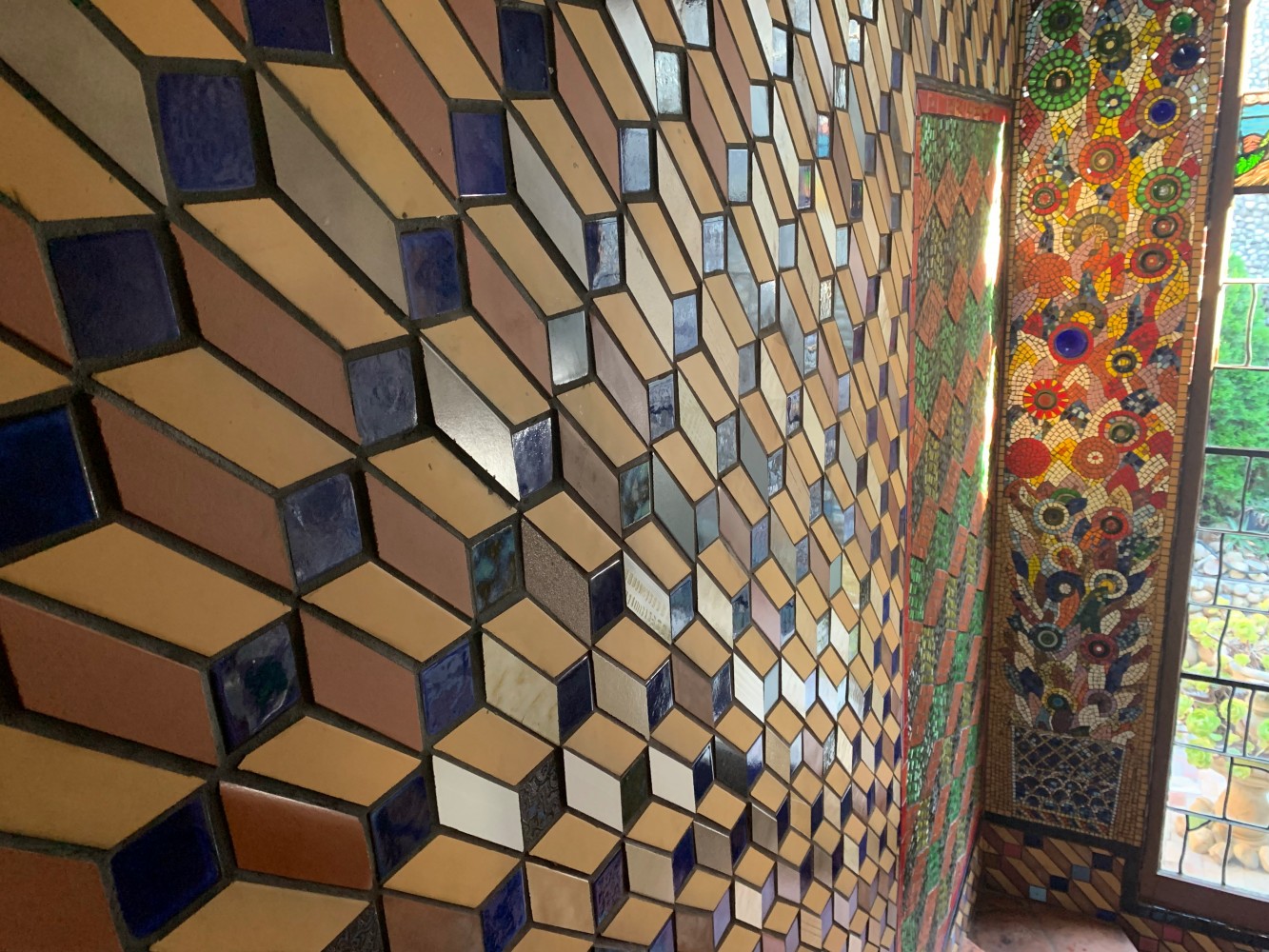 George Ehling's Mosaic House | SPACES Archives
What gets me is that he didn’t do this for fame or money. He did it because he genuinely loved the process. It’s the same energy as when you spend three hours organizing a junk drawer and feel like a god of order. Except his junk drawer became a landmark.

