
You might be thinking, “Why not just stay lower, like 20,000 feet? That seems less scary.” Great question. Lower altitudes mean bumpier rides, friend. That’s where the weather lives—storms, turbulence, clouds that want to shake your coffee right out of the seat-back pocket. Up at 38,000 feet, you’re above most of that nonsense. Above the clouds, above the drama.
Also, there’s a weird little law called the “RVSM” rule (Reduced Vertical Separation Minimum). That’s just a fancy way of saying planes have to stay 1,000 feet apart vertically. At 20,000 feet, you’d be sandwiched between local turboprops and private jets. It’s like rush hour on a highway. At 35,000 feet, the traffic is smoother because only long-haul jets hang out there. Talk about a VIP lane for your seat.
Here’s Where I Drop a Weird Fact on You
Not all planes fly at the same height. Concorde used to cruise at 60,000 feet—literally ten miles up. Why? So it could fly faster than the speed of sound without waking up everyone on the ground with a sonic boom. You can imagine the view from up there: a blue-black sky, a curved horizon, and a faint fear that your face might melt off. Okay, maybe not the last part.
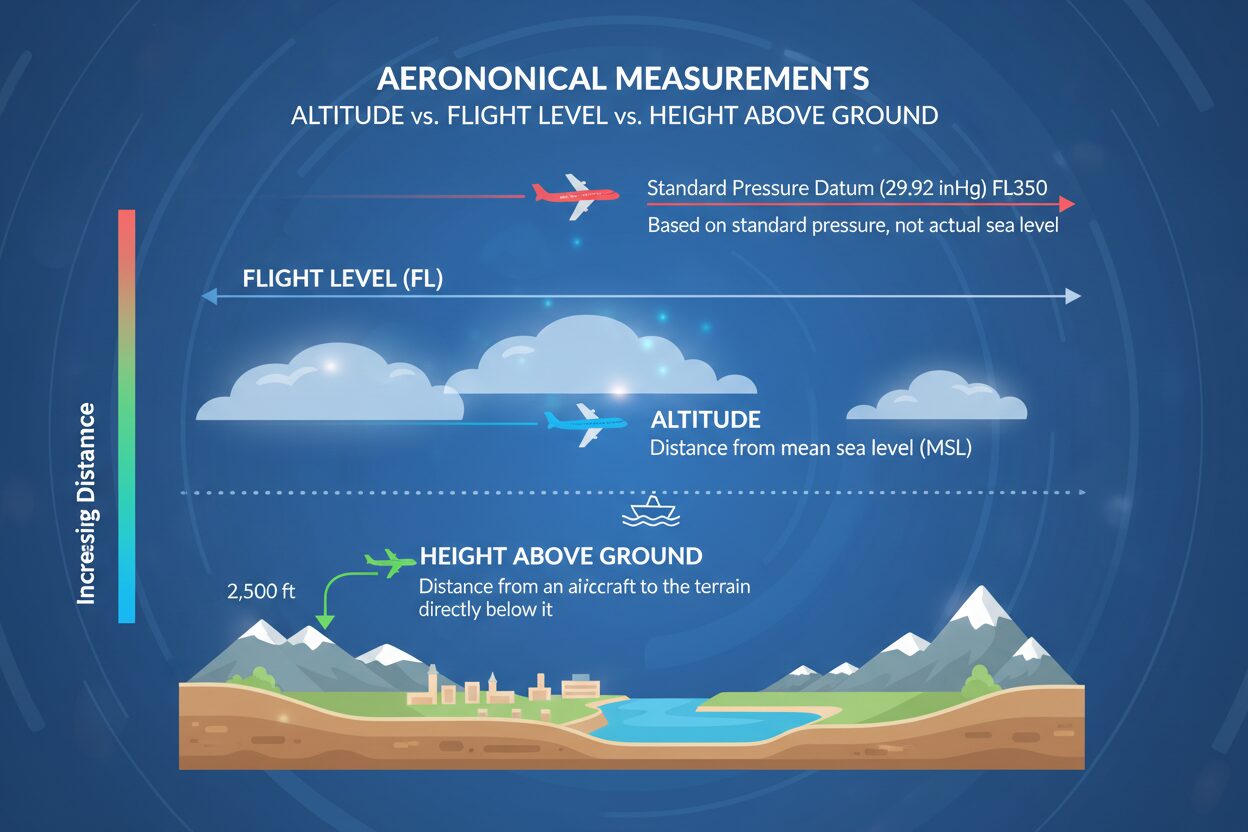 Guide to Aircraft Elevation Levels: Height, Altitude, Flight Level
Private jets? They often fly higher than commercial airliners, between 45,000 and 51,000 feet. They’re built lighter and greedier—greedy for speed and altitude. Meanwhile, cargo planes and domestic flights hover around 28,000 to 35,000 feet. So if you’re on a puddle jumper from Chicago to Detroit, you’re basically in the beginner’s altitude class. No shame in that.