
If you accidentally drop a spoonful of tomato puree on your white shirt, it sits there like a heavy, stubborn pancake. Tomato sauce, however, runs down your shirt like it’s on a slip ‘n slide. That difference matters when you’re layering a lasagna—thick puree stays put, while watery sauce turns your dish into a hot soup of regret.
One time, I confused the two while making chili for a Super Bowl party. I used puree instead of sauce, and the result was a brick of tomato concrete that could have patched a pothole. My guests politely asked for the recipe, but I knew they were just being nice—because I had committed a cardinal sin of red cooking.
Surprising Fact: The pH Power Move
Here’s a wild science nugget: Tomato puree has a lower pH (more acidic) than tomato sauce, because the sauce often has sugar added to balance it out. That means if you use puree in a dish that expects sauce, you might end up with a flavor that makes your mouth pucker like you just bit a lemon while staring at a tax bill.
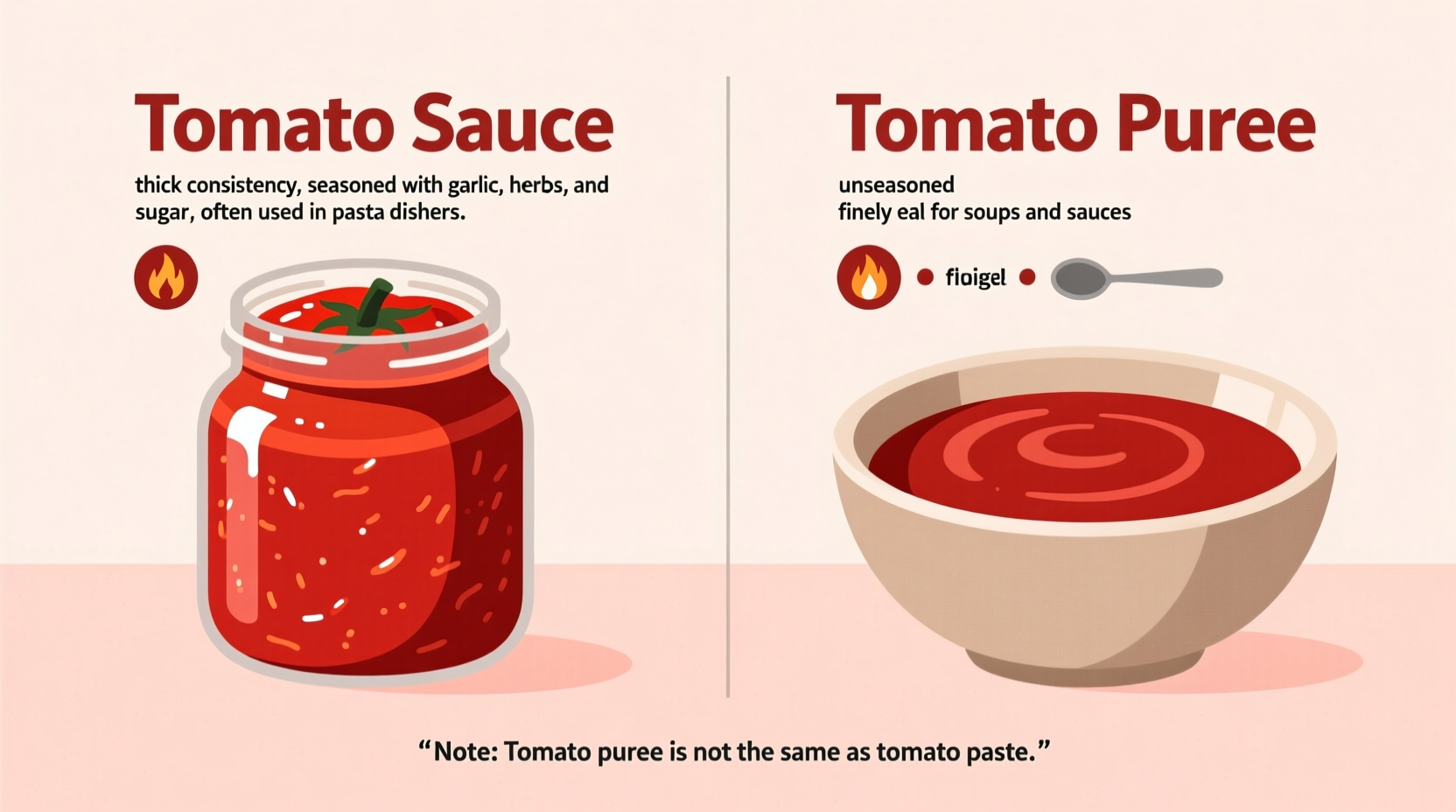 Tomato Sauce vs Puree: Key Differences Explained
And for the love of all that is cheesy, never—never—put tomato puree on a pizza. You’ll end up with a red disc that tastes like bitter, concentrated sadness. Pizza sauce is its own weird cousin in this family, and we don’t speak of it today.

