
Recipes can be cruel with their terms. If a recipe calls for “1 tablespoon dry mustard,” don’t grab the wet, prepared mustard. You’ll drown your dish in vinegar and garlic, and it won’t have the same chemical reaction for binding or heat.
On the flip side, if you only have dry mustard and the recipe says “prepared mustard,” you can fake it. Mix one part dry mustard with two parts water and a pinch of salt. Let it sit for 15 minutes, and boom—you’ve got a DIY condiment.
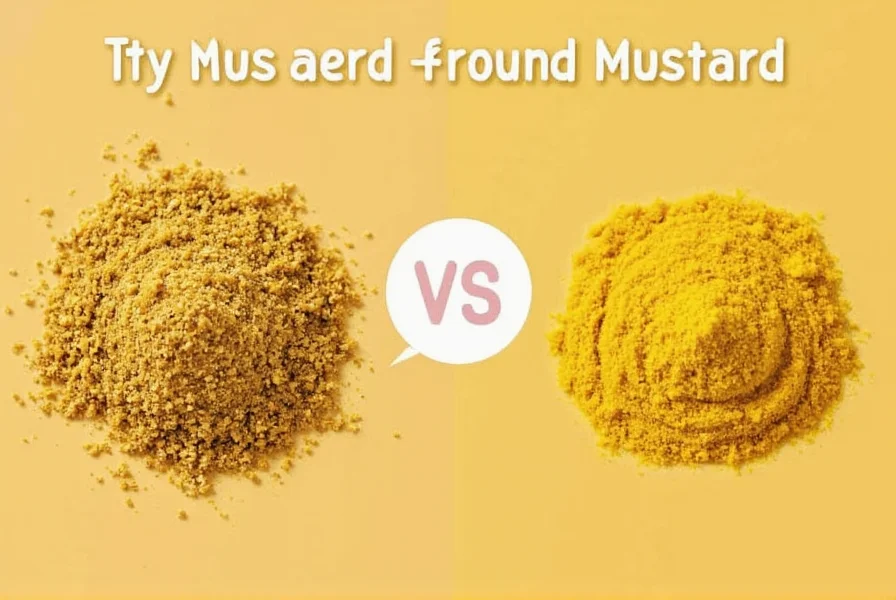 Dry Mustard vs Ground Mustard: Not Interchangeable Without Adjustments
One more wild hack: sprinkle a little ground mustard into your mashed potatoes. It sounds insane, but it adds a subtle, savory warmth that makes them taste richer. Your guests will think you added truffle oil.
Fun Little Facts to Drop at Dinner
The mustard plant is a member of the Brassicaceae family, which means it’s a cousin of cabbage, broccoli, and wasabi. Yes, wasabi’s burn works on a similar chemical principle. You’re basically eating spicy cabbage seeds.
During World War II, mustard powder was used in military field rations. It was cheap, lightweight, and could turn bland rations into something bearable. It was the original flavor booster, before hot sauce went mainstream.
Also, a single mustard seed, when planted, can produce thousands of seeds. That’s why the Bible’s “faith as small as a mustard seed” is such a powerful metaphor. It’s tiny, but it scales like crazy.

