
Think of the incandescent bulb as that cozy, slightly inefficient friend who makes the best cookies. You know, the one who uses a ton of butter but creates pure comfort? That’s this bulb.
It works by zapping electricity through a tiny tungsten filament, heating it until it glows white-hot. It’s basically a mini sun in a glass bubble—simple, beautiful, and wonderfully warm.
But here’s the kicker: about 90% of the energy it uses is turned into heat, not light. It’s like throwing a party where 90% of the guests are just standing around radiating body heat instead of dancing!
Why We Still Love It (Even Though It’s Guzzling Power)
The light it gives off is what we call "full spectrum." This means it makes your face look natural, your food look delicious, and your living room feel like a warm hug. Can fluorescent do that?
You can also dim incandescent bulbs easily, which is perfect for those romantic movie nights. Plus, they’re cheap to buy—you can grab a pack for pocket change.
But, and this is a big but, they die fast. A typical incandescent lasts about 1,000 hours. That’s like a goldfish lifespan in the world of electronics.
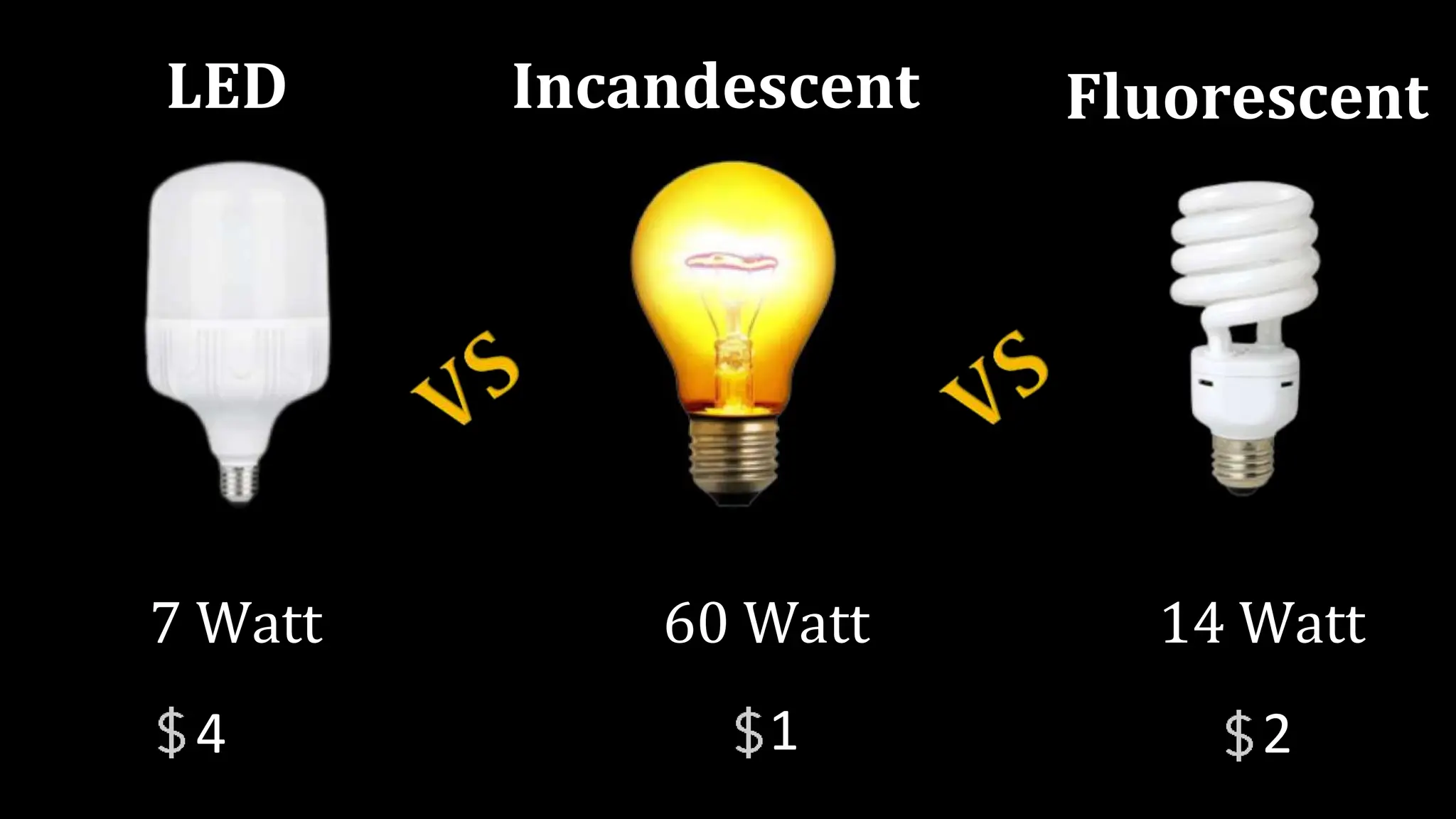 Types Of Bulbs - LED vs Incandescent vs Fluorescent.pptx

