
Wrap the smooth (hot) wire clockwise around the brass screw. Clockwise is key—it’s like coiling a garden hose so it doesn’t kink when you tighten it. If you go counter-clockwise, the wire might slip out later, and you’ll hear a sad little fizzle. Trust me, I’ve heard that sound—it’s the sound of regret.
Wrap the ribbed (neutral) wire clockwise around the silver screw. Tighten each screw firmly, but don’t Hulk-smash them—you can strip the threads or break the wire. Give each wire a gentle tug to make sure it’s locked in. If it comes loose, you just learned why we test things before plugging in.
Now, look at that empty green screw. You might feel tempted to stuff a tiny piece of wire or ground it to the metal housing of the plug. Don’t do that. Without a dedicated ground wire, you’re just creating a fake safety net. Leave it bare. The plug will still work—your lamp just won’t have grounding, which is fine for double-insulated appliances.
The Inner Relief Groove: A Hidden Hero
Most 3-prong plugs have a relief groove inside—a little channel that holds the cord in place. Before closing the plug, make sure the cord sits in that groove. This prevents you from yanking the wires loose when you trip over the cord. And you will trip—it’s a law of physics and clumsy humans.
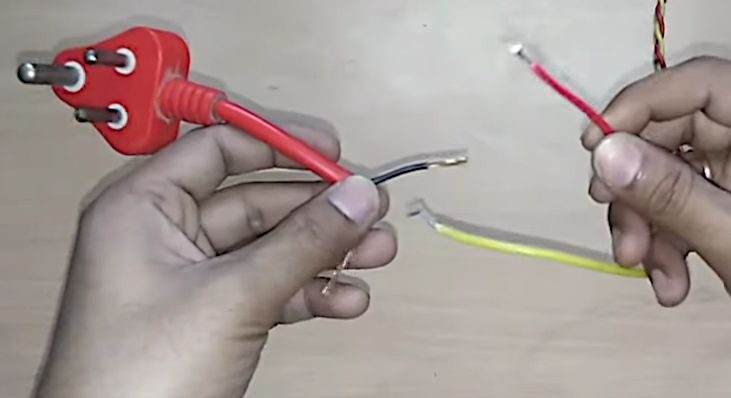 How to Wire a 3 Prong Plug with 2 Wires (Guide)
If your cord has a clamp or strain relief on the plug, tighten it just enough to hold the cord, but not so tight it squishes the insulation. Think of it like hugging a friend—firm enough to show you care, but not so firm they can’t breathe.

