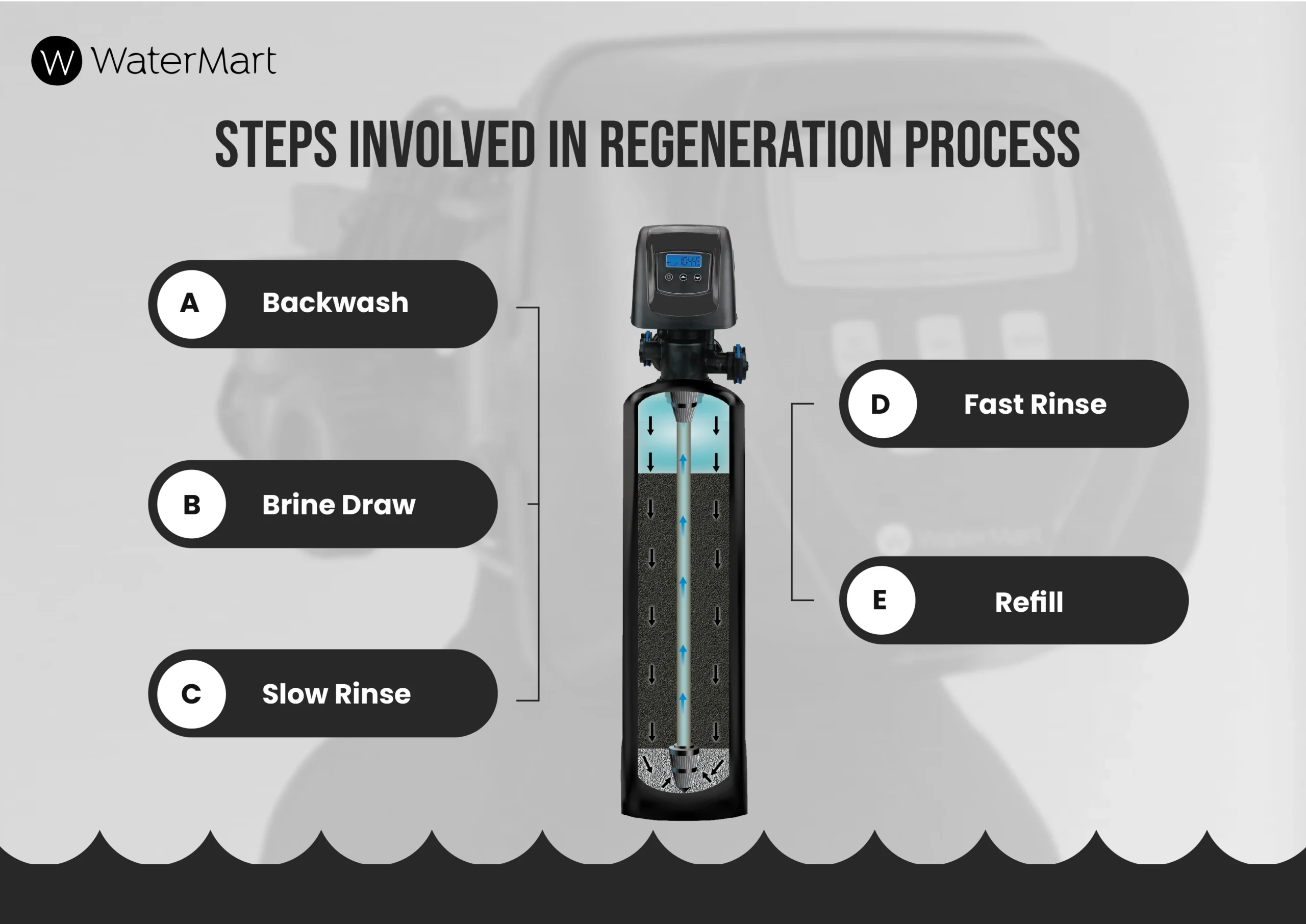
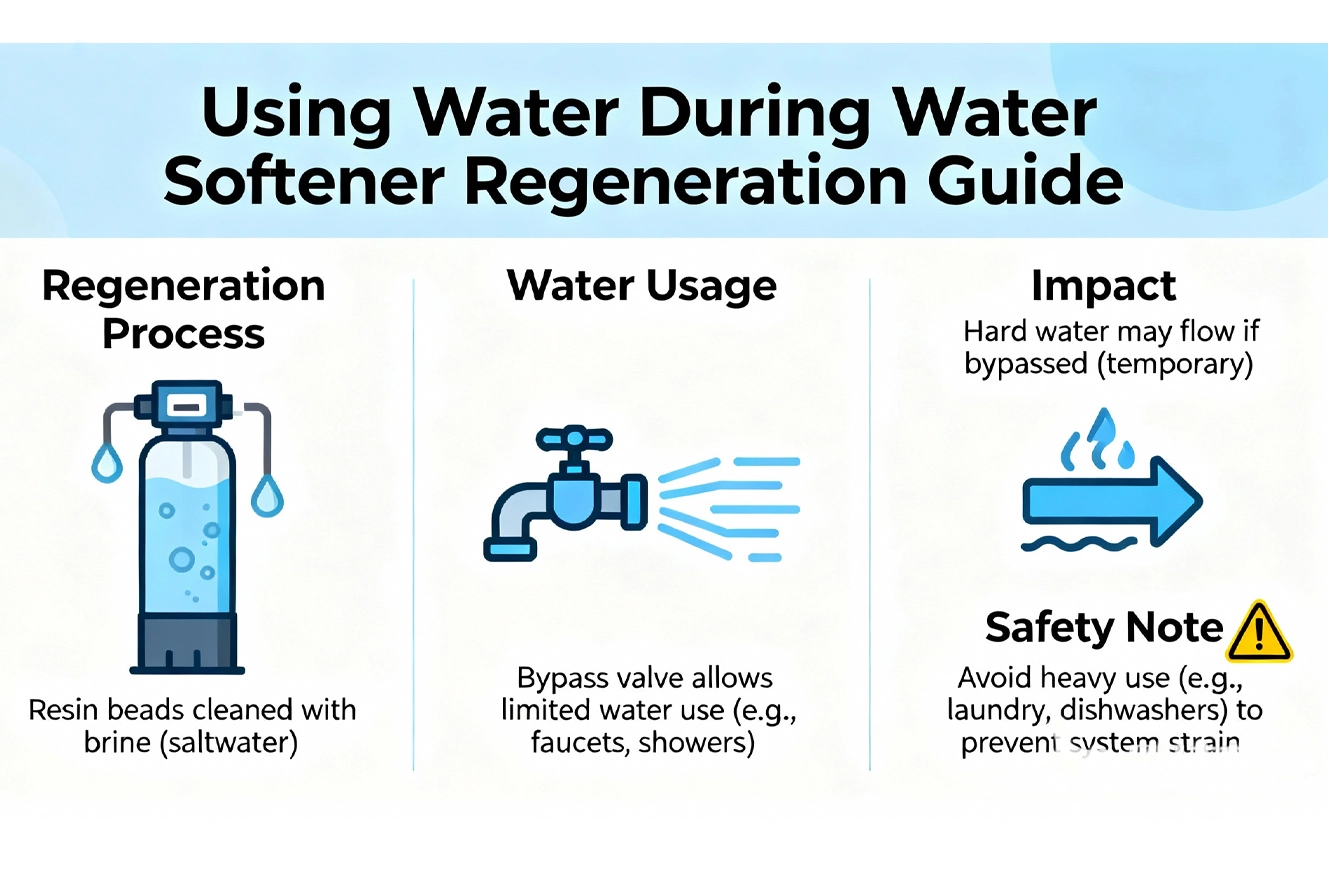
Here’s where things get real: turn on a tap during regeneration and you’ll witness a dramatic drop in water pressure. It’s like the softener suddenly says, “Sorry, I’m on a conference call—hold your horses.” You’ll go from a satisfying, full-blast stream to a sad, dribbling trickle that makes filling a glass feel like a marathon.
I once tried to wash a pan during regeneration. The water came out so weakly that it just stared at the grease and gave up. If your sink starts mimicking a dehydrated cat in a desert, your softener is definitely regenerating.
 Can You Use Water While Softener Is Regenerating-BasideWT
This is also a great time to avoid running the washing machine or dishwasher. Trust me, you don’t want your clothes to end up half-rinsed with a crunchy salt residue. It’s like wearing a suit made of pretzels.
That Salty Smell (and Other Odors)
Your water softener lives for salt. During regeneration, it flushes that briney solution through a resin tank. So if you catch a whiff of something that reminds you of a beach vacation—but, like, the industrial part of the beach—that’s a dead giveaway.
Don’t be alarmed if the water coming out of your kitchen faucet smells slightly of ocean air for a few minutes. It’s just the softener exhaling. If the smell smells like rotten eggs, though, that’s not regeneration—that’s a sign of sulfur bacteria, and you should call a plumber before your house turns into a swamp monster’s lair.
Pro tip: if you have a salt bridge (a crusty layer of salt that blocks the brine), your unit might try to regenerate but fail miserably. It’s like trying to run a marathon in snowshoes—someone forgot to break the ice.

