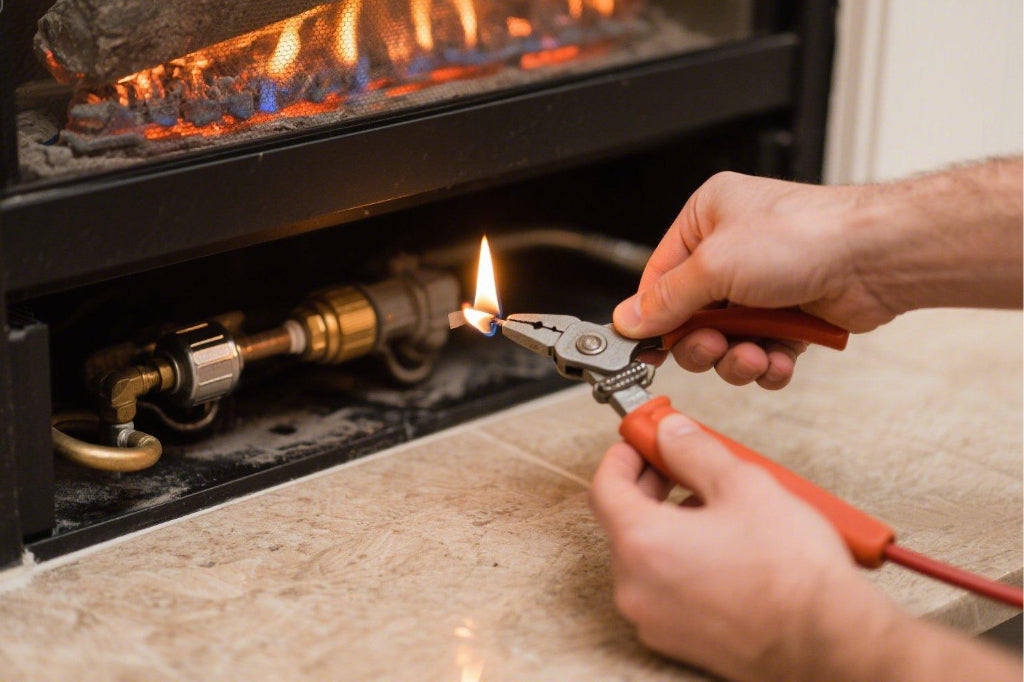
First, turn the knob to the “Off” position. Wait a full minute. I know, it feels like forever. Use this time to ponder why you didn’t do this during the summer. Then, twist the knob to “Pilot.” Now, push that knob in. Like, press it as if you’re trying to push it through the back of the fireplace.
While holding it down, grab your long-reach lighter or a long match. Click the lighter near the little pilot tube. You should see a tiny, very proud, blue flame appear. This is the moment you feel like a wizard who has just discovered fire. Keep holding that knob down for about thirty seconds. Do not let go. Your fingers will get tired. That’s normal.
Why do you hold it? Because the thermocouple (a fancy little metal nub) needs to get hot. It’s like warming up a stubborn cat before it decides to purr. If you let go too soon, the pilot will hiss and die again, mocking you.
When the flame plays hard to get.
Sometimes, the flame ignites, you hold it, you let go—and pfft, it’s gone. Don’t panic. This is the fireplace equivalent of an engine stalling. You just need to be more patient. Try again. Hold the knob down for a full forty-five seconds this time.
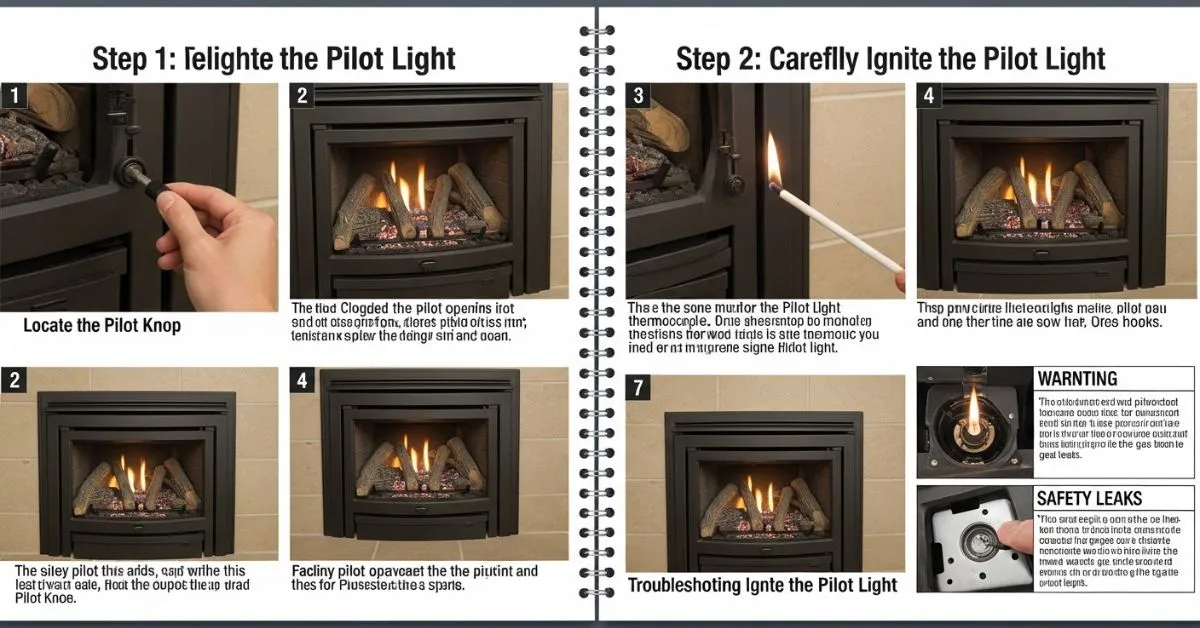 Pilot Light on a Gas Fireplace: Complete Guide to Relighting
If it still doesn’t stay, check that the pilot tube isn’t clogged. A tiny spider or a dust bunny can be a pilot light’s worst enemy. If you have compressed air (canned air for keyboards works great), give it a gentle puff. You’re basically performing emergency medical care on a gas appliance.

