
Don’t get me wrong—activated carbon is awesome for removing chemicals and bad smells. But for radiation? It’s like bringing a butterfly net to a sword fight. It can trap some larger radioactive molecules if they happen to stick to the carbon, but it’s not reliable for most isotopes. I once had a salesperson try to convince me their carbon block filter “neutralizes radiation.” I nodded politely, then silently imagined that poor carbon fighting off cesium-137 with a tiny sword. Spoiler: it lost.
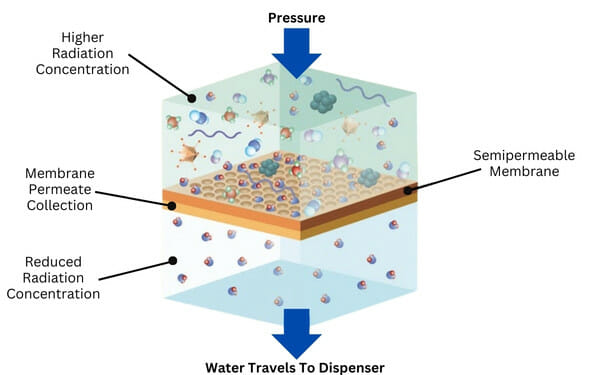 Does Reverse Osmosis Remove Radiation From Drinking Water?
The real trick is layering. Use a sediment filter first to catch dirt and rust, then a carbon block for taste and chemicals, then a reverse osmosis membrane for the big guns. It’s like a water-treatment lasagna—every layer does its job, and the radiation is the sad, stuck-on cheese. I built one of these setups in my garage, and it looked like a plumber’s fever dream. But when Dave tested my water? Clean as a whistle. I practically glowed with pride—though not literally.
What about boiling? Don’t even think about it.
Here’s a classic myth: “I’ll just boil the radiation out.” No, no, no. Boiling concentrates most radioactive particles because the water evaporates but the nasties stay behind. It’s like trying to clean a stain by adding more stain. The only exception is if you have radon gas in your water—then boiling can release it into the air, which is slightly less dangerous than drinking it, but still not great. I tried boiling my water once after a news alert, and I felt like a medieval alchemist. My kitchen smelled like a science experiment gone wrong, and my water tasted like defeat.

