
Once they’re dry, turn off the oven and let the peppers cool completely on the tray. This is crucial: hot peppers trap moisture inside, so cooling prevents them from going soft again. Don’t rush this step—I’ve impatiently crushed warm peppers into a gummy mess more times than I’ll admit.
Now comes the fun part: grinding. You can use a spice grinder, food processor, or a mortar and pestle. For flakes, pulse lightly. For powder, go all the way to a fine dust. But here’s a spicy secret: do this outside or in a well-ventilated area. The airborne capsaicin will make you cough like you’re acting in a bad asthma commercial.
Store your dried peppers in an airtight jar in a dark cupboard. They’ll keep for at least a year—if you don’t use them all first. I label mine with a warning sticker that says “Not a joke” because I once gave a jar to a friend who thought it was paprika. He learned. We all learn.
A few cautionary tales
If you have a gas oven, be extra careful: the pilot light or uneven heat can burn the peppers. Check them more often—like every 20 minutes. Also, don’t walk away and take a nap. I nearly smoked myself out of my apartment doing that. (The smoke detector now judges me silently.)
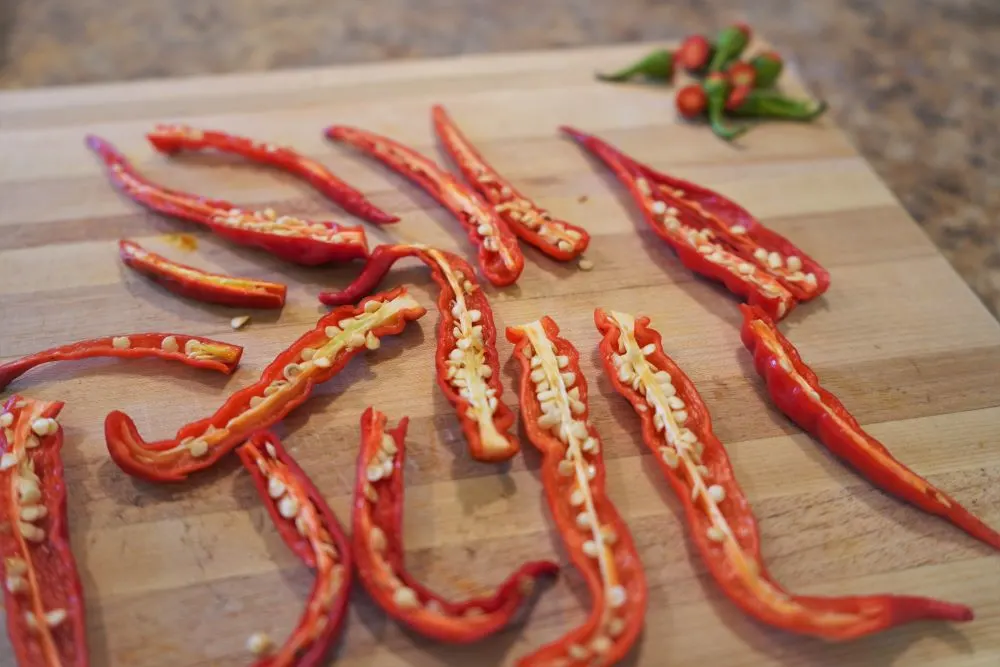 How To Dry Cayenne Peppers In Oven | Detroit Chinatown
And please, please resist the urge to sniff the tray directly. Your nose will feel like it’s been pepper-sprayed by a vengeful ghost. I’ve done it. I cannot recommend the experience, but I can confirm it’s memorable.
Finally, clean your baking sheet immediately after you remove the peppers. The residual oils will harden into a tacky film that’s impossible to scrub off later. I learned that lesson too, and now I have a dedicated “spicy tray” that I use only for peppers. It’s like a sacrificial altar for heat.

