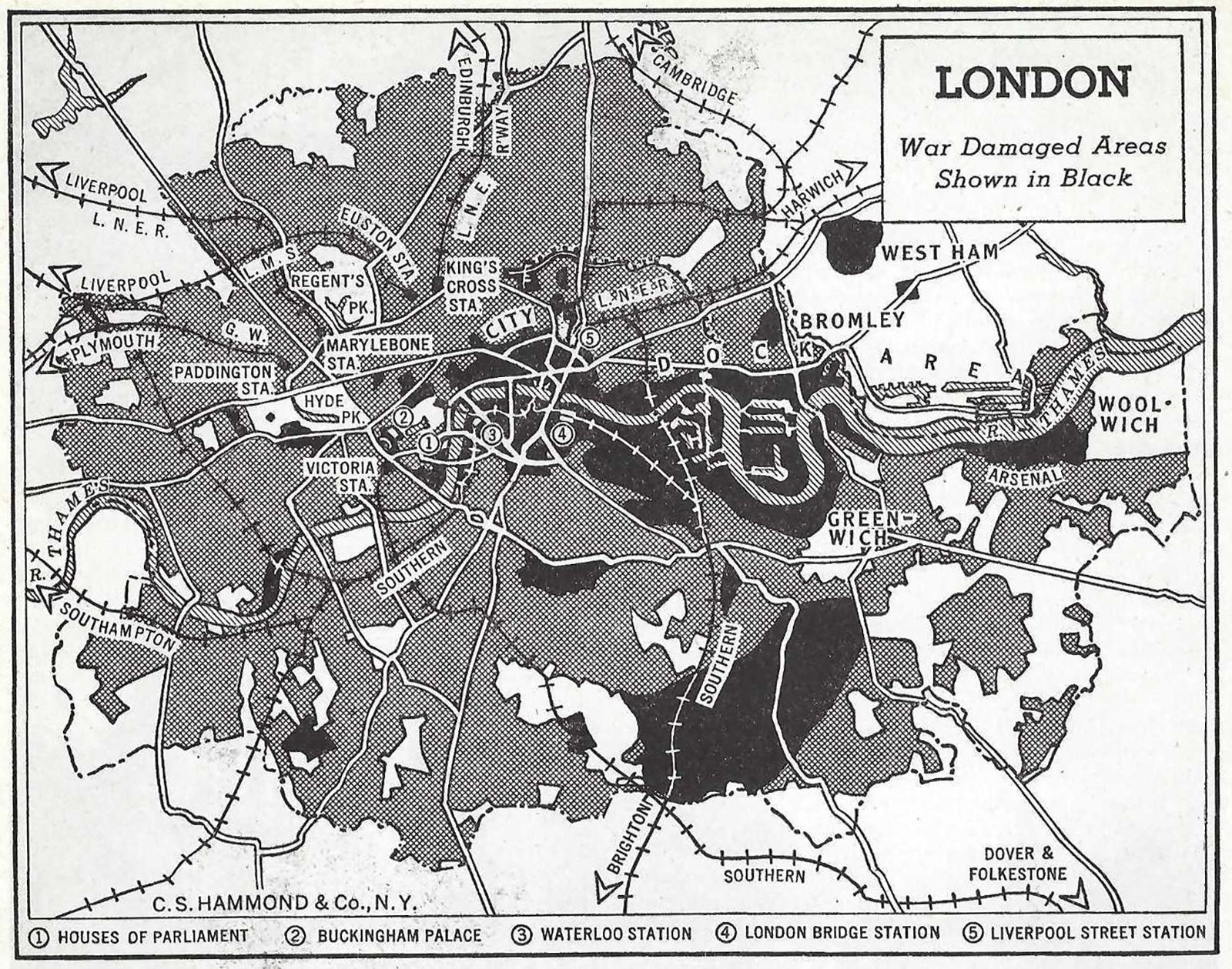
Historians now estimate that about 30% of all buildings in the London County Council area were damaged. But “damaged” can mean anything from “broken window” to “your house is now an open-air swimming pool.” Of those, about 5% were completely destroyed—gone, poof, matchsticks.
 Map Of London Bombing Ww2
So, if you walked the same streets today, you’d notice the gaps. Those sudden modern buildings squeezed between Victorian terraces? They’re the scar tissue of the Blitz.
The “Count the Craters” Game
Londoners became experts at identifying bombs by sound: the whistle of a high explosive, the rustle of incendiaries. They really didn’t enjoy that new skill. By war’s end, there were enough bomb craters to fill the Serpentine lake ten times over—with dirt, not water.
And here’s a weird fact: the bombs actually uncovered some Roman ruins and medieval cellars that had been hidden for centuries. Silver linings? Sure, if your silver lining comes with a side of smoke and sirens.

